Affiliate disclosure: PicksLab earns commissions on qualifying Amazon purchases via the pickslab-20 tag, at no extra cost to you.
The best hair straightener for thick hair is not necessarily the hottest one. A lot of hair can mean densely packed fine strands, coarse strands, or both. Long, dense lengths favor a broad working surface; shorter layers and shaping around the face favor a narrower iron. Adjustable temperature matters when you need control beyond a single preset.
TL;DR - Our top pick: The Paul Mitchell Smooth+ XL combines 1.5-inch ceramic plates with adjustable heat and a temperature-memory function. It is our best balance for long, thick hair, while the narrower CHI G2 is the more flexible choice for layers.
| Pick | Best For | Key Difference |
|---|---|---|
| Paul Mitchell Smooth+ XL | Long, dense hair with adjustable heat | Wide ceramic plates and temperature memory |
| CHI G2 1.25-inch | Layers and a wider choice of temperatures | 180-425 F adjustment in a narrower tool |
| ghd Max | Wide plates without choosing a heat setting | Fixed 365 F temperature |
| BaBylissPRO Nano Titanium Ionic 1.75-inch | Buyers specifically seeking wide titanium plates | LED temperature settings up to 450 F |
| T3 SinglePass Smooth X | Straightening plus bends and waves | Extra-long, narrow plates with beveled edges |
Choosing the Best Hair Straightener for Thick Hair
Start with the part of styling that is frustrating you. If getting through long lengths is the problem, compare plate width. If working around a fringe or turning the ends is awkward, a wider iron may make the problem worse. If your current iron only has one temperature, prioritize adjustable heat rather than simply buying a more powerful tool.
These are dry-hair flat irons, not drying brushes. Finish drying before using them. Our hair dryers for fast drying comparison covers that separate step; our hot air brush guide is more relevant if you want a brush-shaped tool for a voluminous blowout instead of a flat-iron finish.
This is an expert-researched comparison, not a hands-on test. We checked manufacturer specifications, exact variants, and active new-product US Amazon offers on September 9, 2026. We did not measure styling time, damage, shine, or the number of passes each tool requires. The recommendations below follow documented controls and geometry, with limitations made explicit.
Feature Comparison
| Model | Plate Format | Heat Control | Automatic Shutoff |
|---|---|---|---|
| Paul Mitchell Smooth+ XL | 1.5-inch CeraShine ceramic | Adjustable, up to 410 F; memory | After 1 hour |
| CHI G2 | 1.25-inch titanium-infused ceramic | 180-425 F; color-coded display | After 1 hour |
| ghd Max | Wide, US 2-inch listing; ceramic-coated | Fixed 365 F | After 30 minutes of non-use |
| BaBylissPRO BNT4094TUC | 1.75-inch titanium-coated | LED settings up to 450 F | Not verified for this exact model |
| T3 SinglePass Smooth X | 1-inch extra-long CeraGloss ceramic | 9 heat settings | After 1 hour |
Width is not a speed-test result: smaller sections and technique still matter. Likewise, a higher maximum temperature is a capability, not a reason to use that setting. Follow the tool’s instructions and choose the lowest appropriate setting for your hair. Automatic shutoff is a backup, not a substitute for switching off and unplugging after use.
1. Paul Mitchell Smooth+ XL
Buy Paul Mitchell Smooth+ XL on Amazon ->
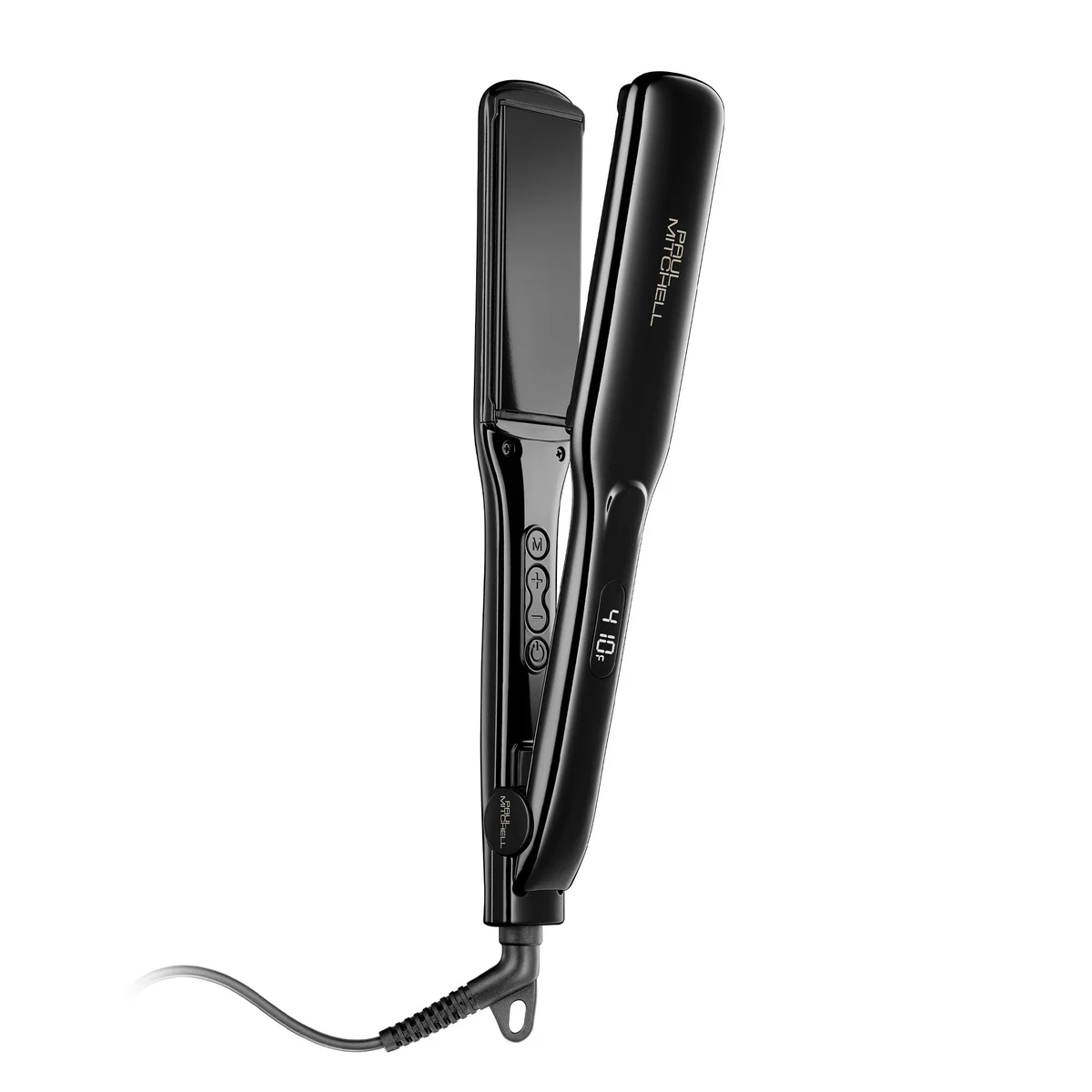
Manufacturer image and specifications: Paul Mitchell Smooth+.
Key specs: Model: PTS15, black XL; Plates: 1.5-inch CeraShine ceramic; Heat: adjustable up to 410 F; Shutoff: after 1 hour; Voltage: 110-240 V; Cord: 9 feet.
The Smooth+ XL pairs a broad plate with temperature adjustment instead of making you choose between the two. Its digital display and last-temperature memory are useful for a repeatable routine: you can return to your selected setting without starting from a generic high-heat preset. That combination makes it our first choice for long, dense hair when straightening is the main job.
The variant is important. Paul Mitchell sells narrower Smooth+ irons on the same product page, and the Amazon listing also groups sizes. Choose the black XL with 1.5-inch plates, model PTS15. The photo above shows the actual XL tool and its temperature controls, not the smaller 1.25-inch version.
Skip it if short layers, bangs, or frequent waves matter more than a broad straightening surface. A narrower iron gives you more room to turn the tool around small sections. We also would not pay extra for the XL expecting proven one-pass results: we have not tested that, and a larger plate cannot compensate for an overloaded section.
2. CHI G2 1.25-inch
Buy CHI G2 1.25-inch on Amazon ->
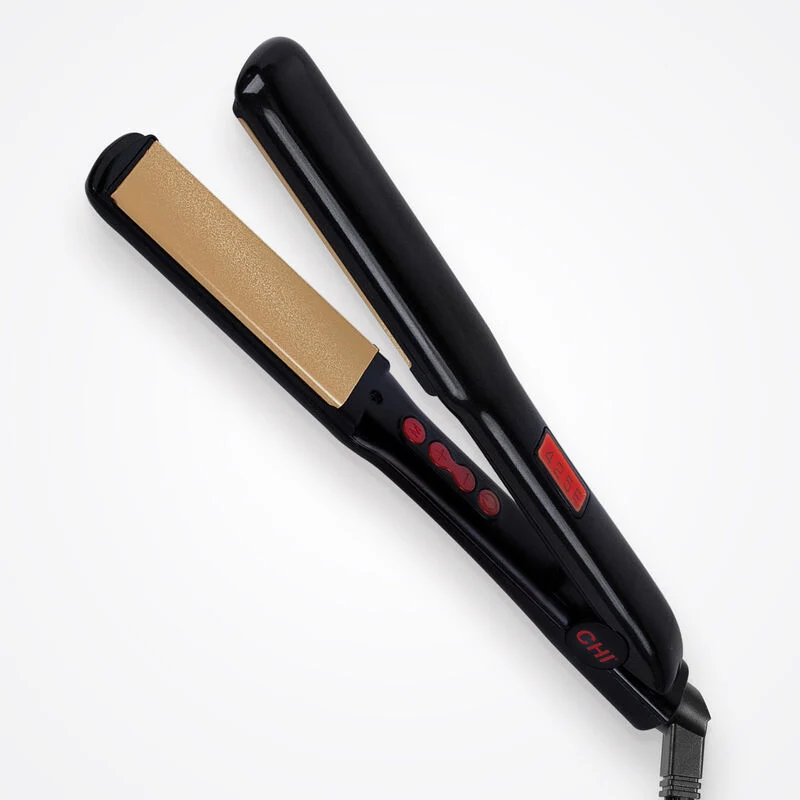
Manufacturer image and specifications: CHI G2 GF7057A.
Key specs: Model: GF7057A; Plates: 1.25-inch titanium-infused ceramic; Heat: 180-425 F; Shutoff: after 1 hour; Cord: 11 feet; Included accessory: thermal mat.
Choose the CHI G2 when temperature flexibility and control around layers matter more than maximum plate width. Its published range extends well below the ghd Max’s fixed setting, and the color-coded display makes the selected heat easier to identify. The longer cord is a practical advantage when your mirror and outlet are not next to each other.
At 1.25 inches, it occupies the middle ground between the broad Paul Mitchell XL and the narrow T3. That makes sense for someone who has a lot of hair but also wants to work around shorter sections. Titanium-infused ceramic is CHI’s plate specification; it should not be mistaken for a solid titanium plate or treated as proof of less damage.
Skip it if your priority is the widest possible straightening surface for long lengths. The G2’s narrower format is its advantage for maneuvering and its compromise for broad coverage. CHI also documents dual-voltage operation, but check the label and destination requirements before packing any heated tool.
3. ghd Max
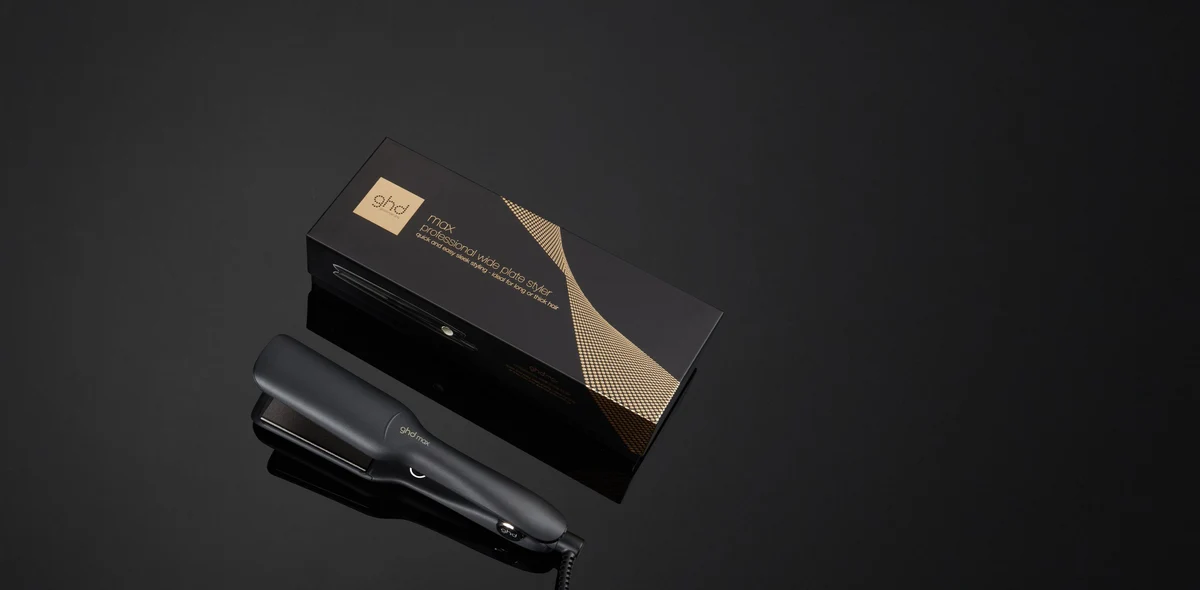
Manufacturer image and specifications: ghd Max US product page.
Key specs: Model: Max Styler, black, 99350081078; Plate format: wide, sold as the US 2-inch option; Heat: fixed 365 F; Sleep mode: after 30 minutes of non-use; Cord: 8.8 feet; Voltage: universal.
The ghd Max is the simplest wide-plate choice here: switch it on and use its fixed temperature rather than choosing among heat levels. It suits someone who already knows that setting fits their routine and wants a wide tool without temperature decisions. The ceramic-coated plates and two-zone heating system are documented features, not evidence that it will suit every hair condition.
The lack of adjustment is a real limitation, not just a different interface. You cannot turn the Max down below 365 F. Skip it if you need a lower selectable temperature or want narrow plates for short sections. The adjustable Paul Mitchell or CHI is a more appropriate starting point when temperature control is part of your buying requirement.
Check the selected variant before checkout: choose Max, black, and the 2-inch plate option. Gold and other ghd models can appear within the shared Amazon listing. We matched the selected Max option to model 99350081078 rather than relying on the listing headline alone.
4. BaBylissPRO Nano Titanium Ionic 1.75-inch
Buy BaBylissPRO Nano Titanium Ionic 1.75-inch on Amazon ->
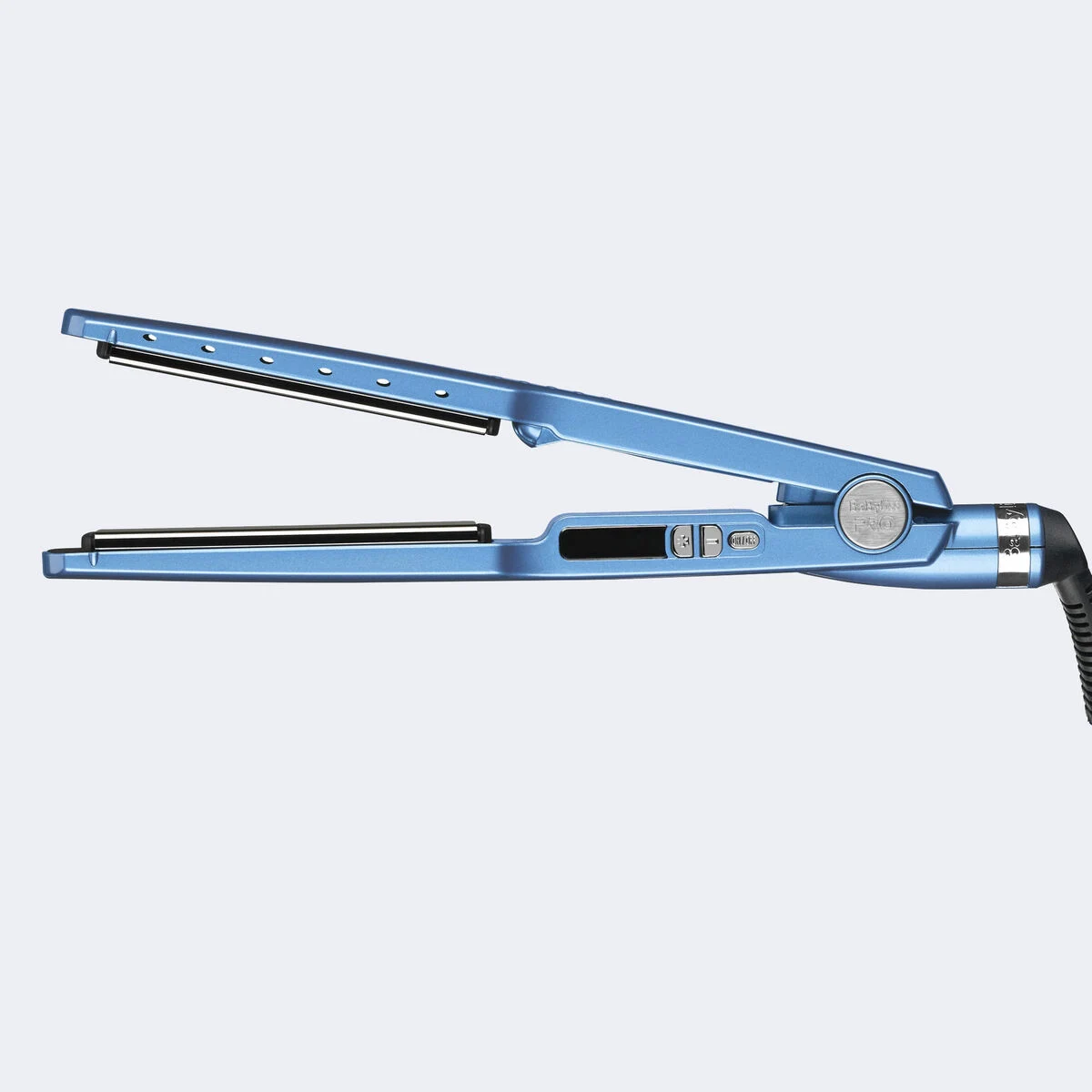
Manufacturer image and specifications: BaBylissPRO BNT4094TUC.
Key specs: Model: BNT4094TUC; Plates: 1.75-inch titanium-coated; Heat: LED settings up to 450 F; Heater: ceramic; Warranty: 4-year limited.
This is the pick for someone specifically shopping for a wide titanium-coated iron with adjustable heat. Its 1.75-inch format offers a broader plate than the CHI or T3, while the LED controls avoid the ghd’s single-temperature restriction. Choose it for those concrete features, not because the highest temperature automatically makes it better for thick hair.
There are important documentation gaps. Automatic shutoff and dual-voltage support are unverified for this exact model. The current manufacturer page does not establish either, and similar-looking BaBylissPRO models are not interchangeable evidence. Skip it if automatic shutoff or confirmed international-voltage compatibility is a requirement. The Paul Mitchell gives you clearer documentation on both.
Select the 1.75-inch option and check model BNT4094TUC: multiple widths share Amazon pages. This is the Ionic model, not the similarly named Ultra-Thin iron. We have not claimed a minimum temperature or a precise list of temperature steps because the current product page only establishes the maximum and LED settings.
5. T3 SinglePass Smooth X
Buy T3 SinglePass Smooth X on Amazon ->
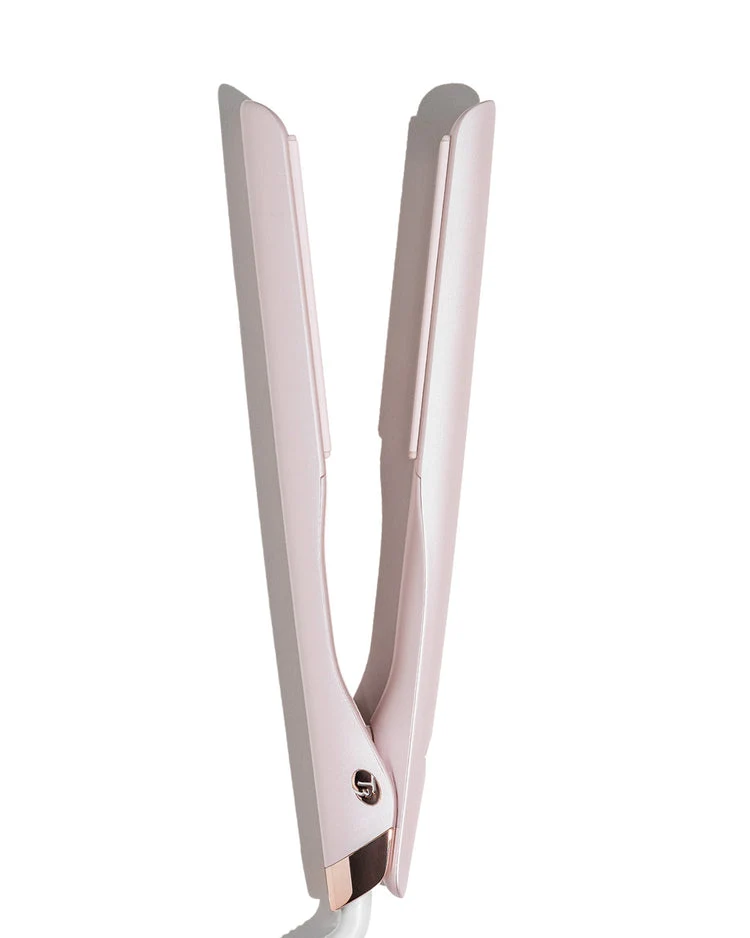
Manufacturer image and specifications: T3 SinglePass Smooth X.
Key specs: Model: SinglePass Smooth X, Satin Blush; Plates: 1-inch extra-long CeraGloss ceramic; Heat: 9 settings; Shutoff: after 1 hour; Voltage: 100-240 V; Warranty: 2 years.
The T3 is the narrow-plate alternative for thick hair with layers, bends, or waves in the styling plan. Beveled edges and extra-long plates give it a different purpose from a wide straightening-only shortlist. Pick it when you want one iron for straight lengths and shaped ends rather than the broadest plate available.
Nine heat settings let you adjust the tool instead of accepting a fixed preset. T3’s SinglePass name is not a result we independently verified, and we are not promising that thick hair needs only one pass. The useful buying facts are the narrow geometry, selectable heat, and documented shutoff and voltage support.
Skip it if broad coverage on long, dense lengths is your main priority. Also watch the name: SinglePass Smooth X has 1-inch plates; the older SinglePass X is a different, wider iron. The link here is for Smooth X in Satin Blush, not the older model.
Who Should Buy What
- Long, dense hair and adjustable heat: start with the Paul Mitchell Smooth+ XL.
- Shorter layers or lower selectable temperatures: choose the CHI G2.
- Wide plates with one fixed setting: consider the ghd Max, provided 365 F fits your needs.
- A specific preference for wide titanium-coated plates: compare the BaBylissPRO BNT4094TUC, accounting for the unverified shutoff and voltage features.
- Straightening plus waves and shaped ends: choose the narrower T3 SinglePass Smooth X.
FAQ
Are wider plates always better for thick hair?
No. Width is most useful when long lengths and a broad straightening surface are your priorities. A narrower tool can be easier to position around a fringe, short layers, and shaped ends. Hair density alone does not settle the choice: consider your shortest sections and whether you want waves as well as straightening.
Does thick hair need a 450 F straightener?
Not automatically. Having many strands does not establish the temperature appropriate for each strand. Choose a tool with the adjustment you need, follow its instructions, and do not interpret the maximum setting as a target. Paul Mitchell’s published guidance, for example, distinguishes fine, medium, and coarse hair rather than assigning one setting to everyone with a lot of hair.
Is ceramic or titanium better for thick hair?
The material label alone is not enough to choose. This shortlist includes ceramic, titanium-infused ceramic, and titanium-coated plates, which are different constructions. Plate width, available temperature control, hair condition, and styling technique also matter. We have not performed a controlled damage or glide comparison, so we do not rank one material as universally gentler or faster.
Can I take these straighteners overseas?
Paul Mitchell, CHI, ghd, and T3 document dual or universal voltage for the listed models; we could not establish it for the exact BaBylissPRO model. Check the tool’s label, manual, and destination voltage before use. A plug adapter changes the connection, not the voltage, and a travel adapter’s USB power rating is not its AC appliance rating. Our international travel adapter guide explains that separate buying decision.
Bottom Line
For long, thick hair, the Paul Mitchell Smooth+ XL is our most balanced choice: wide plates, adjustable temperature, memory, and documented automatic shutoff. Buy the CHI or T3 instead when narrower sections and shaping matter more. The useful upgrade is the tool that fixes your particular styling frustration, not simply the iron with the highest heat ceiling.
This article contains affiliate links. PicksLab may earn a small commission at no extra cost to you. Our recommendations are based on the review method described in this article.