The under-$300 robot vacuum category has changed more in the last two years than the previous five. LiDAR mapping, dual anti-tangle brushes, and self-emptying bases — all of which used to start at $500 — are now standard features at $200–$280. The catch is that the budget tier is also crowded with models that look similar on paper but behave very differently in a real house with pets, rugs, and door thresholds.
This guide narrows the field to six picks that hold up across the things that actually matter day to day: hair tangling, carpet transitions, edge cleaning, dock reliability, and how often you have to touch the dustbin. Each pick is matched to a specific use case so you can skip straight to the one that fits your home.
Quick Picks Table
| Pick | Best For | Suction | Self-Empty | Price Range |
|---|---|---|---|---|
| Roborock Q7 L5 | Best overall under $200 | 8,000 Pa | No | ~$140–$250 |
| Tikom L8000 Plus | Best self-emptying value | 6,000 Pa | 90 days | ~$220–$280 |
| DREAME D10 Plus Gen 2 | Largest homes, longest runtime | 6,000 Pa | 90 days | ~$200–$280 |
| iRobot Roomba 105 Vac | Brand-name reliability | High (LiDAR) | No | ~$149–$200 |
| eufy RoboVac 11S Max | Quietest, no-app pick | 2,000 Pa | No | ~$140–$180 |
| Lefant M210 | Best ultra-budget under $100 | Brushless | No | ~$90–$130 |
Prices fluctuate frequently in this category — verify current listings before purchasing.
1. Roborock Q7 L5 — Best Overall Under $200
LiDAR mapping plus dual anti-tangle brushes at a budget price
| Spec | Detail |
|---|---|
| Suction | 8,000 Pa HyperForce |
| Navigation | 360° LiDAR with PreciSense |
| Brushes | Dual anti-tangle (JawScrapers + 0% tangle side brush) |
| Mopping | Yes — 270 ml tank, mop lift on carpet |
| Runtime | ~150 minutes |
| Multi-floor maps | Up to 4 |
| WiFi | 2.4 GHz only |
The Q7 L5 is the model that resets expectations for what a budget robot vacuum should do. The 8,000 Pa suction figure isn’t a marketing number — it’s enough to lift dried-on debris out of low-pile carpet on a single pass, which most sub-$200 robots can’t do. The dual anti-tangle brush system is the bigger story for households with shedding pets: the JawScrapers main brush combined with a redesigned side brush dramatically reduces hair wrap compared to the bristle rollers on older budget models.
LiDAR mapping at this price used to be unheard of. It builds a usable map on the first run, supports up to four floor plans for multi-story homes, and lets you set no-go zones, no-mop zones, and per-room cleaning schedules from the app. Mop lift on carpet detection is included — important if you want to vacuum and mop in a single pass without wetting your area rugs.
Who this is for: Anyone who wants the best feature set at the lowest price point. Pet owners benefit the most from the anti-tangle brushes, but the Q7 L5 is the default recommendation for almost any home under 1,500 sq ft.
Strengths:
- 8,000 Pa suction handles low- and medium-pile carpet, not just hard floors
- Dual anti-tangle brushes — minimal hair maintenance compared to roller-only designs
- LiDAR with multi-floor support is rare under $200
- Vacuum and mop in one run with automatic mop lift on carpets
Trade-offs:
- 2.4 GHz WiFi only — won’t connect on 5 GHz-only networks
- Vacuum-plus-mop combo mode is fine for daily maintenance, but deep cleans work better with vacuum-only and mop-only passes run separately
- No self-emptying base at this price tier — bin needs to be tipped every 2–3 runs in pet homes
- 150-minute runtime can require a recharge in homes over 1,000 sq ft
Bottom line: If your budget is under $250 and you want the most capable robot vacuum, the Q7 L5 is the answer. The combination of LiDAR, real suction, and anti-tangle brushes at this price point is what most premium models offered two years ago.
Check Roborock Q7 L5 on Amazon →
2. Tikom L8000 Plus — Best Self-Emptying Value
90-day hands-free operation with LiDAR — a feature combo that used to cost $500+
| Spec | Detail |
|---|---|
| Suction | 6,000 Pa |
| Navigation | 360° LiDAR |
| Self-Empty | 90 days, 3 L sealed dust bag |
| Mopping | Yes — adjustable water flow |
| Runtime | ~150 minutes |
| Multi-floor maps | Up to 5 |
| WiFi | 2.4 GHz and 5 GHz |
The L8000 Plus is the answer if you want to genuinely forget about your robot vacuum for weeks at a time. The 3 L sealed dust bag in the base lasts up to 90 days — longer than most premium self-emptying models — and the bag system contains pet dander and dust during emptying instead of releasing it back into the room. Combined with LiDAR mapping, five floor plans, and dual-band WiFi, this is the best feature density under $300.
Suction at 6,000 Pa is a step below the Roborock Q7 series but still handles daily debris and pet hair on hard floors and low-pile carpet without issue. Carpet detection auto-boosts suction when a rug is detected. The vacuum-and-mop combo offers three water flow settings, and the multi-floor mapping recognizes which floor it’s on automatically — useful in townhouses and multi-story homes where moving the dock between floors is a hassle.
Who this is for: Pet owners and busy households who want the lowest possible maintenance overhead. If emptying a dustbin every couple of days is the thing keeping you from buying a robot vacuum, this solves that problem at a price that wasn’t possible 18 months ago.
Strengths:
- 90-day self-empty interval is the longest in this price tier
- Sealed bag contains allergens — relevant in homes with shedding pets
- LiDAR with 5-floor mapping handles complex homes
- Dual-band WiFi (2.4 + 5 GHz) avoids the connection issues common to budget models
Trade-offs:
- Tikom is a newer brand — fewer years of long-term reliability data than Roborock or iRobot
- Auto-empty cycle is loud for ~15–20 seconds (typical of all self-emptying bases)
- Mopping is best for light daily wiping, not stuck-on stains
- Replacement dust bags are an ongoing cost (~$15–25 per pack)
Bottom line: If self-emptying is the feature you care most about, the L8000 Plus is the best value pick. The Roborock Q7 M5+ is the established-brand alternative at a similar price, but Tikom’s longer empty interval and dual-band WiFi are real advantages.
Check Tikom L8000 Plus on Amazon →
3. DREAME D10 Plus Gen 2 — Best for Large Homes and Long Runtime
285-minute battery and a 4 L self-empty base for 2,000+ sq ft homes
| Spec | Detail |
|---|---|
| Suction | 6,000 Pa Vormax (4 levels) |
| Navigation | Smart Pathfinder LiDAR |
| Self-Empty | 90 days, 4 L dust bag |
| Mopping | Yes — 150 ml tank, 3 flow settings |
| Runtime | ~285 minutes (quiet mode) |
| Multi-floor maps | Yes |
| WiFi | 2.4 GHz |
The D10 Plus Gen 2 solves a specific problem: large homes where most budget robots run out of battery before they finish a full clean. The 285-minute runtime in quiet mode is roughly double what most competitors offer — enough to clean a 2,000+ sq ft home in a single charge. The 4 L self-empty bag is also the largest in this tier, extending the hands-free interval even in pet homes that fill bins quickly.
LiDAR navigation with multi-floor mapping is on par with the Roborock Q7 series. The four adjustable suction levels are useful if you have a mix of delicate area rugs and high-traffic carpets — you can dial in lower suction to avoid pulling threads from looser-weave rugs while still using max power on the main carpet. The floating rubber brush minimizes hair tangling but isn’t as aggressive at preventing wrap as Roborock’s dual-brush system.
Who this is for: Homes over 1,500 sq ft, multi-story houses, and anyone whose previous robot vacuum kept stranding itself on the way back to the dock with debris still on the floor.
Strengths:
- 285-minute runtime is the longest in this price tier by a wide margin
- 4 L self-empty bag — longest hands-free interval of any pick here
- Four suction levels for genuine tuning across floor types
- LiDAR with multi-floor mapping handles complex layouts
Trade-offs:
- Mopping is light wiping only, not a replacement for a dedicated mop
- Dreamehome app is functional but less polished than Roborock’s
- Single-brush design is slightly more prone to long-hair tangling than dual-brush models
- 2.4 GHz WiFi only
Bottom line: If your home is large enough that battery life is the limiting factor, the D10 Plus Gen 2 is the right pick. For smaller homes, the Tikom L8000 Plus offers comparable self-emptying at a slightly lower price.
Check DREAME D10 Plus Gen 2 on Amazon →
4. iRobot Roomba 105 Vac — Best Brand-Name Pick
ClearView LiDAR and iRobot’s long-term reliability for under $200
| Spec | Detail |
|---|---|
| Suction | 70× vs. Roomba 600 series |
| Navigation | ClearView LiDAR |
| Brushes | Multi-surface rubber dual-brush |
| Mopping | No |
| Runtime | ~200 minutes |
| Voice | Alexa, Siri, Google Assistant |
| WiFi | 2.4 GHz |
iRobot’s pitch on the 105 Vac is straightforward: take the navigation and reliability the brand is known for, drop it into the under-$200 price band. ClearView LiDAR maps the home accurately, the vacuum cleans in tidy rows rather than the bumper-car patterns of older Roomba models, and the dual rubber brush system handles both hard floors and carpet without hair tangling.
The 200-minute runtime sits between the Roborock Q7 series and the DREAME D10 Plus, which is enough for most single-floor homes up to ~1,500 sq ft. There’s no mopping and no self-emptying base at this price — those features push you up to the Roomba Combo or i-series — but the core vacuuming experience is the most refined of any pick here. iRobot’s app is also the most mature on the market, and the brand has by far the longest track record for warranty support and parts availability after 3+ years of ownership.
Who this is for: Buyers who prioritize brand reputation, long-term reliability, and a polished app experience over feature checklists. Also the right pick if you’ve owned older Roombas and want a meaningful upgrade without leaving the iRobot ecosystem.
Strengths:
- Best-in-class navigation accuracy and edge cleaning
- iRobot’s rubber dual brushes are the gold standard for pet hair without tangling
- Most mature app and ecosystem in the category
- Brand reputation backed by 30+ years of robotics experience
Trade-offs:
- No mopping or self-empty base at this price — Tikom and DREAME pack more features for similar money
- Some users report long-term navigation drift after 12+ months (firmware-related, usually fixable via reset)
- May leave subtle track marks on very dense plush carpets
- iRobot’s premium accessories and replacement parts are more expensive than third-party alternatives
Bottom line: If you want the most refined core vacuuming experience and don’t care about mopping or self-emptying, the Roomba 105 Vac is the right pick. For maximum features per dollar, the Roborock Q7 L5 wins; for maximum reliability and ecosystem polish, this does.
Check iRobot Roomba 105 Vac on Amazon →
5. eufy RoboVac 11S Max — Quietest Pick, No App Required
The “Toyota Corolla” of robot vacuums — boring, reliable, no setup
| Spec | Detail |
|---|---|
| Suction | 2,000 Pa with BoostIQ |
| Navigation | Random with sensors |
| Height | 2.85 inches (slim) |
| Mopping | No |
| Runtime | ~100 minutes |
| Noise | 55 dB |
| App / WiFi | None — remote control only |
The 11S Max is a deliberately simple robot vacuum, and that’s its strength. There’s no WiFi setup, no app, no firmware updates that break things, no mapping that gets confused. You unbox it, charge it, press the button, and it cleans. At 55 dB it’s the quietest robot vacuum in this guide — quieter than most floor fans — which makes it the right pick for daytime cleaning while you’re working from home, sleeping pets, or apartments with thin walls and noise-sensitive neighbors.
The 2.85-inch height is genuinely useful: it slides under sofas, beds, and low cabinets that block taller LiDAR-equipped models. BoostIQ auto-adjusts suction within 1.5 seconds when carpet is detected, and the four cleaning modes (Auto, Spot, Edge, Manual) cover normal use cases. The trade-off is no smart navigation — the 11S Max bounces semi-randomly, which is fine for studios and one-bedroom apartments but inefficient in larger or more complex layouts.
Who this is for: Studio and small apartment dwellers, anyone who has been burned by buggy app-based smart-home products, and households that need quiet daytime operation. Also a strong pick as a backup or second-floor unit if your primary robot lives downstairs.
Strengths:
- 55 dB operation is genuinely quiet — usable during meetings and naps
- Slim 2.85-inch profile reaches under furniture other models can’t
- No app, no WiFi, no setup friction — just works out of the box
- Long product history on the market means failure rate is well-understood and low
Trade-offs:
- 2,000 Pa is the lowest suction in this guide — fine for hard floors and low-pile, weak on medium-pile carpet
- Random navigation is inefficient in larger homes
- Single side brush — edges and corners are less consistent than dual-brush models
- No app means no scheduling beyond the daily timer on the remote
Bottom line: If you want a robot vacuum that just runs and doesn’t demand your attention, the 11S Max is the pick. Don’t choose it for whole-home cleaning of a large house — choose it for a small space where quiet, reliable operation matters more than features.
Check eufy RoboVac 11S Max on Amazon →
6. Lefant M210 — Best Ultra-Budget Under $100
Sub-$100 robot vacuum that isn’t embarrassing
| Spec | Detail |
|---|---|
| Suction | Brushless (no Pa rating) |
| Navigation | FreeMove 3.0 with 6D sensors |
| Height | 2.99 inches |
| Mopping | No |
| Runtime | ~120 minutes |
| App | Yes — Alexa and Google Assistant |
The M210 is the only sub-$100 robot vacuum I’d recommend. The brushless suction port design is the key feature: instead of a spinning roller that traps long hair, it pulls debris straight into the dustbin through an opening — eliminating tangling entirely. The trade-off is reduced effectiveness on carpet, since there’s no agitation, but on hardwood, tile, and low-pile rugs it works fine for daily maintenance.
The 11-inch diameter (smaller than most competitors) means it can clean between dining chair legs without nudging them — a small detail that matters in tight spaces. App control with Alexa and Google Assistant integration is unusual at this price, and the 120-minute runtime is enough for apartments and small homes. There’s no smart mapping, so it bounces around in zigzag and random patterns, which is fine for spaces under ~600 sq ft but inefficient beyond that.
Who this is for: First-time robot vacuum buyers, college apartments, small studios, or anyone who wants a backup unit for a specific room. Also a strong pick for households with pets if hair tangling has been a deal-breaker on previous robot vacuums.
Strengths:
- Brushless design eliminates hair wrap — zero brush maintenance
- Compact 11-inch diameter fits between chair legs and tight furniture
- App and voice control are rare features under $100
- 120-minute runtime is generous for the price
Trade-offs:
- Less effective on medium and high-pile carpet — best for hard floors
- Random navigation is inefficient in larger homes
- 500 ml dustbin needs frequent emptying in pet homes
- Dock requires ~5 feet of clear space on either side
Bottom line: If your budget is $100 or less, this is the pick. Go to the Roborock Q7 L5 if you can stretch to $140 — the feature gap is enormous — but the M210 is genuinely usable, not a toy.
How to Choose: Matching Features to Your Home
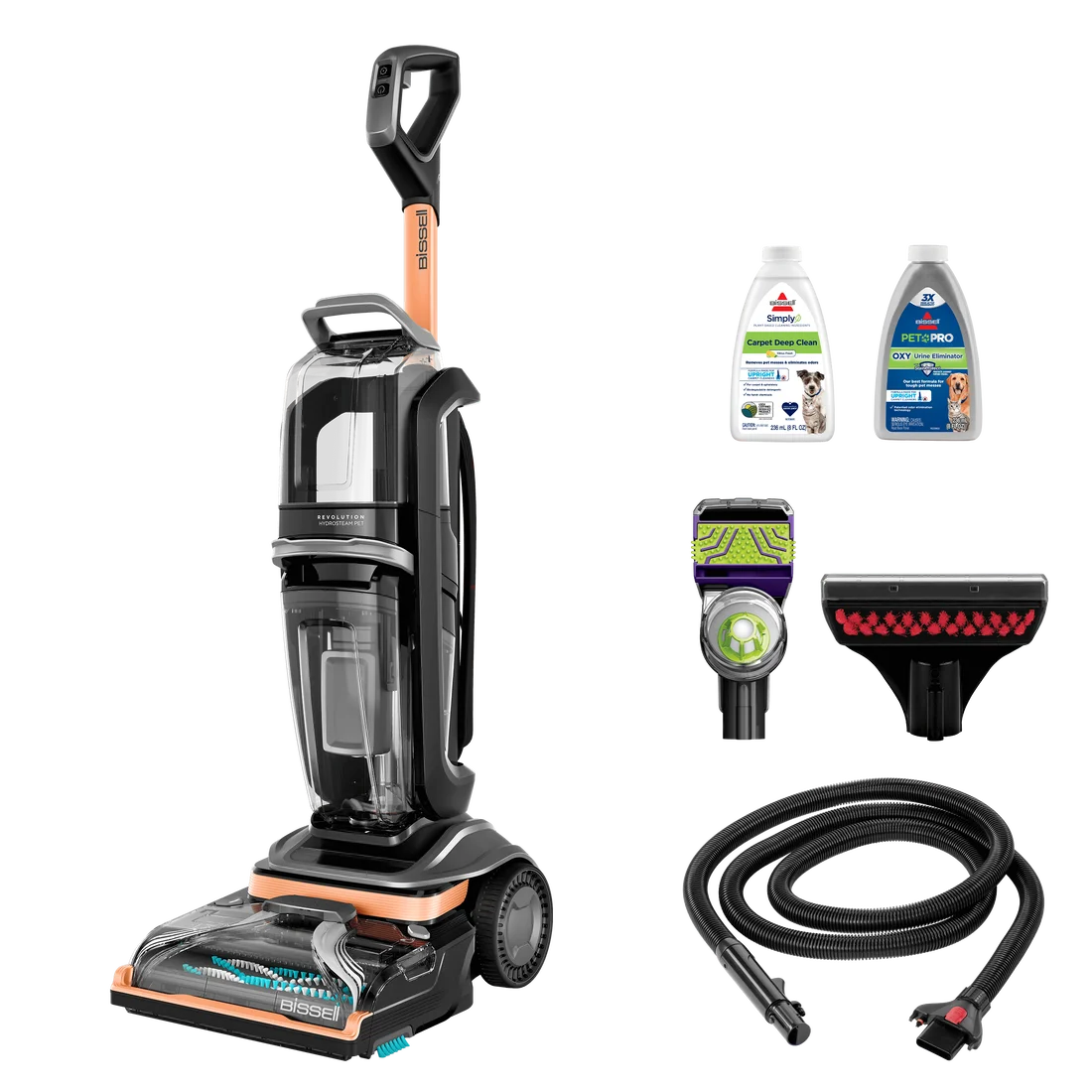
Dry pickup and wet pet stains need different tools. For accidents in carpet or washable upholstery, our upright and portable carpet-cleaner comparison explains hose reach, steam limitations and the cleanup each machine requires.
The under-$300 category has enough good options that the right pick depends on what you’re actually solving for. The four most useful filters:
Pet hair → prioritize anti-tangle brushes. Strong suction matters less than brush design. The Roborock Q7 L5’s dual anti-tangle system, iRobot’s rubber dual brushes, and the Lefant M210’s brushless port all eliminate hair wrap in different ways. Single-brush bristle rollers (common on older budget models) are the wrong choice for pet homes regardless of suction rating.
Large or multi-story home → prioritize battery and mapping. Runtime under 120 minutes will leave debris in homes over 1,000 sq ft, and random navigation wastes 30–40% of battery on overlap. The DREAME D10 Plus Gen 2 (285 minutes) and the Tikom L8000 Plus (multi-floor LiDAR with auto-recharge-and-resume) are the right answers here.
Mixed flooring → look for carpet detection and mop lift. If you want a vacuum-and-mop combo for daily maintenance, the mop pad needs to lift automatically when carpet is detected. The Roborock Q7 series and Tikom L8000 Plus both handle this. Models without mop lift will wet your area rugs.
Hands-off convenience → self-emptying is worth $80–$120. If you’re going to use the robot vacuum daily and have pets, a self-empty base genuinely changes the relationship — you stop thinking about it for weeks at a time. The Tikom L8000 Plus (90-day) and DREAME D10 Plus Gen 2 (90-day) lead the category. Replacement bags add $15–25 every 2–3 months as an ongoing cost.
What You’re Giving Up vs. a $500+ Model
It’s worth being honest about the budget tier’s limits. Compared to premium robot vacuums, the under-$300 picks here generally trade off:
- Mopping accuracy: Budget mops are best for light daily wiping, not stuck-on messes. Self-washing dock systems start around $700.
- AI obstacle avoidance: Most picks here use LiDAR for navigation but lack the camera-based AI that recognizes shoes, cables, and pet messes. You’ll need to pre-tidy floors before a clean.
- Premium carpet performance: High-pile shag carpet remains a problem at every price point under $300. The Roborock Q7 L5 handles low- and medium-pile well; nothing in this guide is reliable on dense plush.
- Long-term battery life: Premium brands hold capacity longer. Expect 2–4 years of strong battery performance from budget picks vs. 4–6 years from premium models.
That said, the gap on day-to-day cleaning is small. The Roborock Q7 L5 at $140–$200 does 80–90% of what a $500 model does for the things that actually happen in a house: daily debris pickup, scheduled runs, app control, and pet-hair management.
Verdict
For most homes, the Roborock Q7 L5 is the right pick. The combination of LiDAR mapping, 8,000 Pa suction, dual anti-tangle brushes, and mop lift on carpet at $140–$200 is the best feature density in the category, full stop.
Step up to the Tikom L8000 Plus if self-emptying is a must-have, the DREAME D10 Plus Gen 2 if your home is over 1,500 sq ft, or the iRobot Roomba 105 Vac if you want the most polished brand experience. Step down to the eufy 11S Max for a quiet, no-app pick or the Lefant M210 if your budget is under $100.
Whichever you pick, the budget category in 2026 is genuinely good — the days of paying $500+ for a robot vacuum that actually works are over.
Disclosure: This article contains affiliate links. We may earn a commission from qualifying purchases at no additional cost to you.