Got a lamp whose switch is always behind the couch, or a device you suspect is using more electricity than it should? A smart plug can solve either problem without replacing the thing you already own. It sits between the wall outlet and the device, letting you switch power from an app or a schedule. Some also measure electricity use. Others only turn things on and off.
We compared five options around those differences. The Tapo P110M two-pack is the most useful starting point here because it includes energy monitoring and Matter without costing more than a single Amazon plug. But you might only need one inexpensive lamp switch, or you might already have a Thread network and want to use it. Those are good reasons to choose differently.
Affiliate disclosure: PicksLab earns commissions on qualifying Amazon purchases via the pickslab-20 tag, at no extra cost to you.
TL;DR - Our top pick: The Tapo P110M two-pack adds electricity-use information as well as switching. For one lamp with no interest in energy data, the Tapo P125M costs less upfront.
Price Comparison
Prices checked October 12, 2026, for ordinary new US offers with active Add to Cart and Buy Now controls. The table is ordered by package price, not price per plug. These Amazon-sold and shipped offers showed free standard delivery subject to the usual $35 qualifying-order threshold; no Prime-only discount is included. Offers and delivery estimates can change.
| Product | Price checked | Package | What it adds | Catch to check |
|---|---|---|---|---|
| Tapo P125M | $11.99 | One plug | Matter-over-Wi-Fi switching | No energy monitoring |
| Tapo P110M | $23.99 | Two plugs | Energy monitoring in Tapo plus Matter | Energy displays differ between apps |
| Amazon Smart Plug | $24.99 | One plug | Alexa app and routine integration | Alexa-only; delivery estimate October 31-November 27 at check |
| Meross MSS115 Matter Mini | $26.59 | Two plugs | Matter-over-Wi-Fi switching | No energy monitoring; don’t confuse with MSS315 |
| Eve Energy Matter, US | $30.35 | One plug, new | Thread connectivity and energy monitoring | Compatible Matter controller and Thread border router required |
The Eve price is the new offer, not the lower-priced Amazon Resale alternative. The Amazon plug can be ordered, but its long delivery estimate makes it a poor choice when you need one this week.
Will Your Appliance Actually Turn Back On?
A smart plug controls power. It does not press the appliance’s Start button. A simple lamp with a mechanical switch can usually stay switched on while the plug handles the outlet. A device that returns to standby after a power interruption may still need you to press a button, making a scheduled outlet much less useful.
For a suitable lamp, and only if its instructions permit normal unplugging and reconnecting, check what happens when power is restored. Also check the smart plug’s own power-restoration setting. “My lamp comes back on” and “the smart plug restores its previous state” are two separate parts of the behavior you want.
Don’t extend this experiment to equipment that must shut down properly or remain powered. A home server needs an orderly shutdown, not a scheduled power cut. Space heaters, cooking appliances, medical equipment and other safety-critical loads are not appropriate casual automation projects. Amazon’s smart-plug safety guidance specifically excludes heaters, stoves and devices unsafe to operate unattended. A 15A rating is not blanket approval for every appliance below 15A; motor, inductive and lighting limits can differ.
Feature Comparison
| Product | Network | Energy data | App and platform path | Extra network hardware |
|---|---|---|---|---|
| Tapo P125M | 2.4 GHz Wi-Fi | No | Tapo; compatible Matter platforms | No Tapo hub for its app; platform controller requirements still apply |
| Tapo P110M | 2.4 GHz Wi-Fi | Yes, in Tapo | Tapo; compatible Matter platforms | Same distinction between app control and Matter control |
| Amazon Smart Plug | 2.4 GHz Wi-Fi | No | Alexa | No Echo required for Alexa app setup |
| Meross MSS115 | 2.4 GHz Wi-Fi | No | Meross; compatible Matter platforms | Platform-specific Matter controller |
| Eve Energy | Thread, not Wi-Fi | Yes, with supported app/platform | Matter; Eve app on supported Apple Home or Google Home setups | Matter controller plus Thread border router |
Matter and Thread aren’t interchangeable terms. The three Wi-Fi Matter models here do not need a Thread border router merely because they support Matter. Eve does. Your chosen platform may still require a compatible controller for setup, remote access or automations. TP-Link’s Matter setup guide explains the platform requirements; check your actual hub model rather than assuming any smart speaker qualifies.
Matter also doesn’t automatically enroll a plug in every app after one pairing. Sharing it with another platform is a separate commissioning step. Nor does a Matter logo guarantee that every platform exposes every energy feature identically.
1. TP-Link Tapo P125M
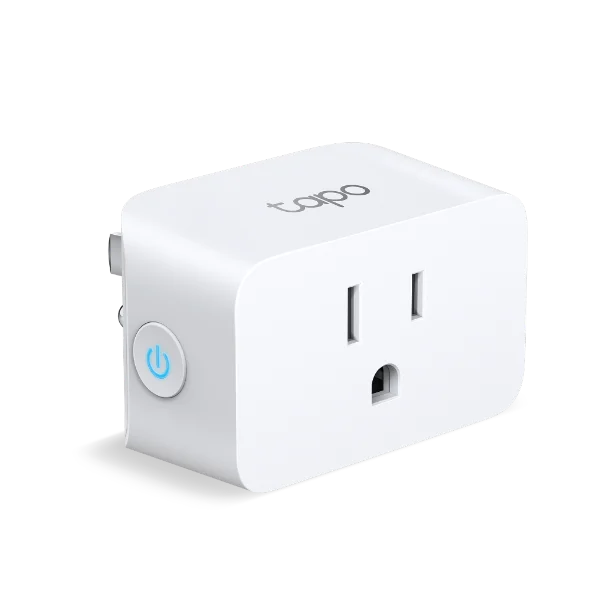 Image: TP-Link, P125M US specifications.
Key specs: Network: 2.4 GHz Wi-Fi; Standard: Matter over Wi-Fi; Energy monitoring: no; US resistive load rating: 15A, 1800W at 120V.
The P125M is the straightforward choice for one lamp you want to schedule or switch remotely. At $11.99, you aren’t paying for a second plug you don’t need. Its Matter support also leaves a route into a compatible home platform instead of tying ordinary switching to one voice assistant.
Use the official Tapo app and support downloads. Initial setup uses a compatible iOS or Android phone and a 2.4 GHz Wi-Fi network. Tapo app control does not require a Tapo hub; using a separate Matter platform has that platform’s controller requirements. The side button remains useful when a person standing next to the lamp just wants it on.
Skip it if the reason for buying is to measure electricity use. This model cannot tell you what the lamp or another suitable device costs to run. The P110M below is the better match for that question, with the same caution that a load rating doesn’t authorize unattended operation of unsuitable appliances.
2. TP-Link Tapo P110M Two-Pack
Buy Tapo P110M two-pack on Amazon ->
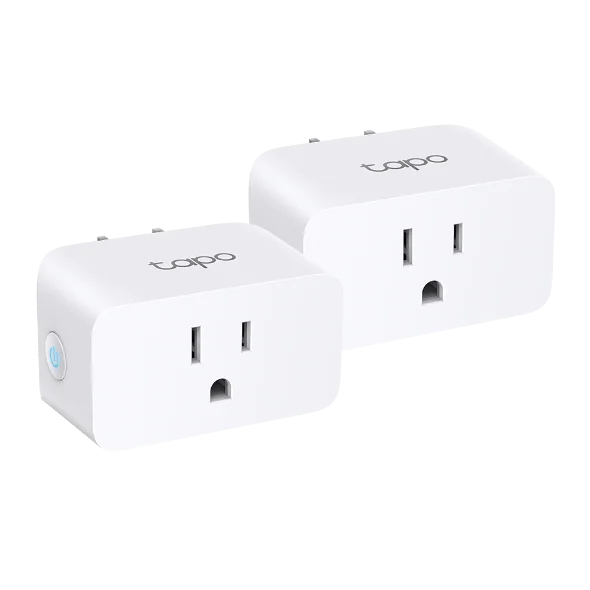 Image: TP-Link, P110M US product specifications. The linked Amazon offer is the two-pack.
Key specs: Network: 2.4 GHz Wi-Fi; Energy monitoring: supported in Tapo; Dimensions: 66 x 38 x 40 mm; US resistive load rating: 15A, 1800W at 120V.
The P110M is our starting point when you want to understand electricity use as well as switch something off. The $23.99 two-pack works out to about $12 per plug, so at these offers the energy feature barely changes the per-plug cost compared with a P125M. You still need two useful locations to benefit from buying a pair.
Its meter makes questions more concrete: is a suitable device using power continuously, or does its consumption fall sharply after it finishes a task? Record a representative period rather than assuming one instant reading describes the whole month. Any cost estimate also depends on the electricity rate you supply; it is not a replacement for your utility bill.
Use Tapo’s official app and model support. A compatible iOS or Android phone and 2.4 GHz Wi-Fi are needed for Tapo setup. Use the Tapo energy display as the confirmed feature here, rather than assuming every connected Matter app will present the same history and controls. These are US plugs, not the differently rated European P110M.
Skip it if you only need one simple outlet switch and won’t use the second plug or energy data. Otherwise, the combination of two outlets and metering makes more sense at this price than buying the Alexa-only Amazon model for flexibility.
3. Amazon Smart Plug
Buy Amazon Smart Plug on Amazon ->
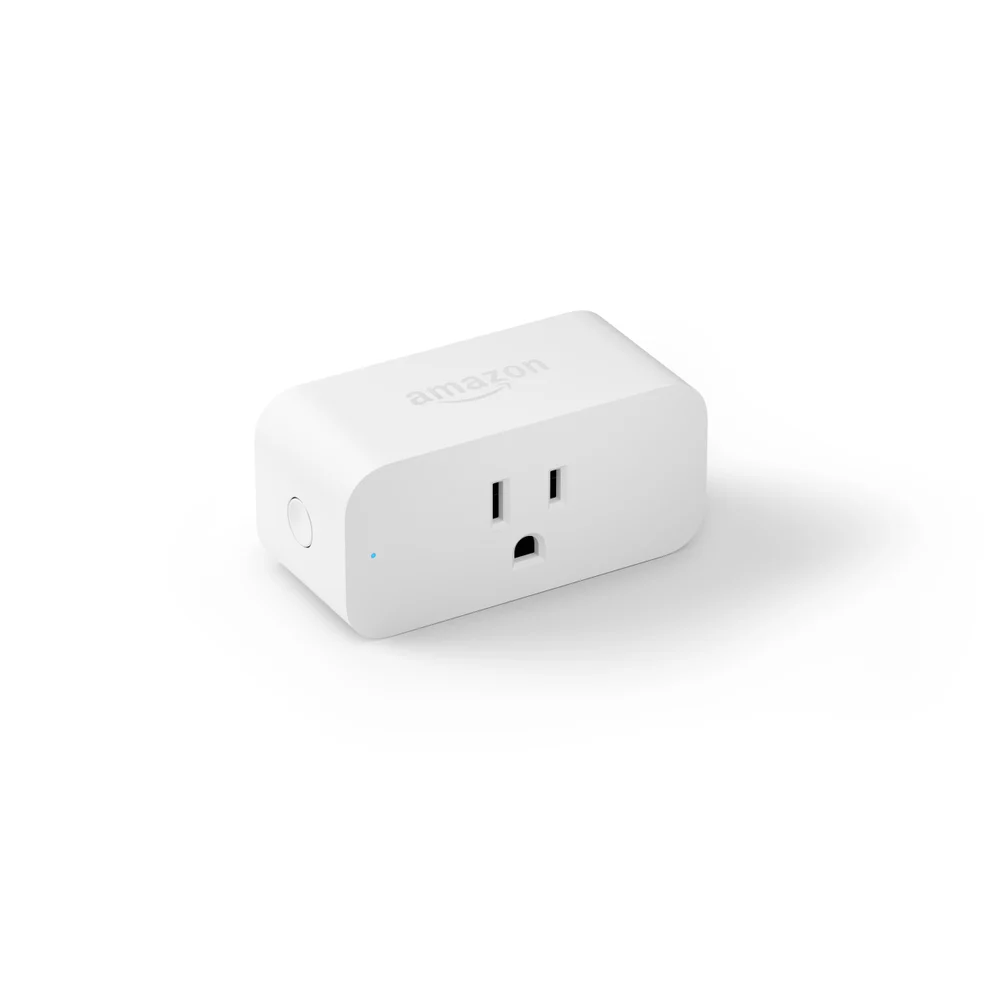 Image: Amazon, official Smart Plug press media.
Key specs: Network: 2.4 GHz Wi-Fi; Platform: Alexa; Energy monitoring: no; Resistive rating: 15A at 120V; Inductive rating: 10A.
The Amazon plug fits a home that already organizes everything around Alexa routines. You can schedule a suitable lamp through the Alexa app without buying an Echo just to set up the plug. Its physical button also gives you a local control instead of making every action a voice command.
At $24.99, it isn’t the value winner in this group. It lacks Matter and energy monitoring, and the checked new offer’s October 31-November 27 delivery estimate is another reason to look elsewhere for an immediate project. The active order button should not be confused with quick availability.
Amazon’s Alexa app guide links the setup path for iOS and Android. An Amazon account and the Alexa app are required; a separate Echo is optional for voice control. Read the load-specific safety instructions, including the restriction against plugging it into an extension cord or power strip.
Skip it if you want Apple Home, a Matter-based setup or electricity measurements. Familiar branding doesn’t add those missing features.
4. Meross MSS115 Matter Mini Two-Pack
Buy Meross MSS115 two-pack on Amazon ->
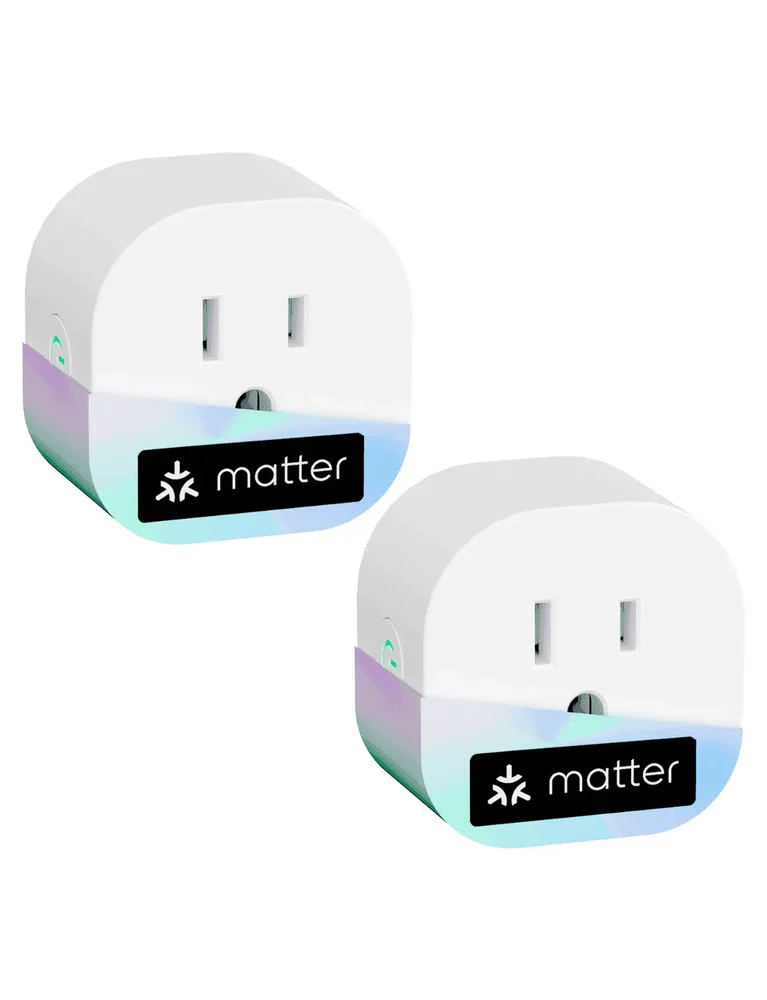 Image: Meross, MSS115 US manufacturer page.
Key specs: Model: MSS115; Network: 2.4 GHz Wi-Fi; Standard: Matter with multi-admin support; Package: two US plugs; Manufacturer phone minimums: iOS 16.1 or Android 8.1.
The MSS115 is an alternative for someone who already likes the Meross app and wants two Matter switches. The $26.59 package provides ordinary outlet control without moving onto Thread. Sharing through Matter can put a plug into another compatible platform, but you still have to perform that platform’s setup.
Use the official app links and device guidance on Meross support. Check the current app requirements as well as the manufacturer’s stated iOS 16.1 or Android 8.1 minimums. Your chosen Matter platform may impose newer requirements or require its own controller.
Skip it if you want energy monitoring: this is MSS115, not the differently equipped MSS315. At the checked prices, the Tapo P110M pair costs less and includes metering. The reason to pick Meross is a specific preference for its app or setup, not an unsupported claim that it is more reliable or universally compatible.
5. Eve Energy Matter, US Model
Buy Eve Energy Matter on Amazon ->
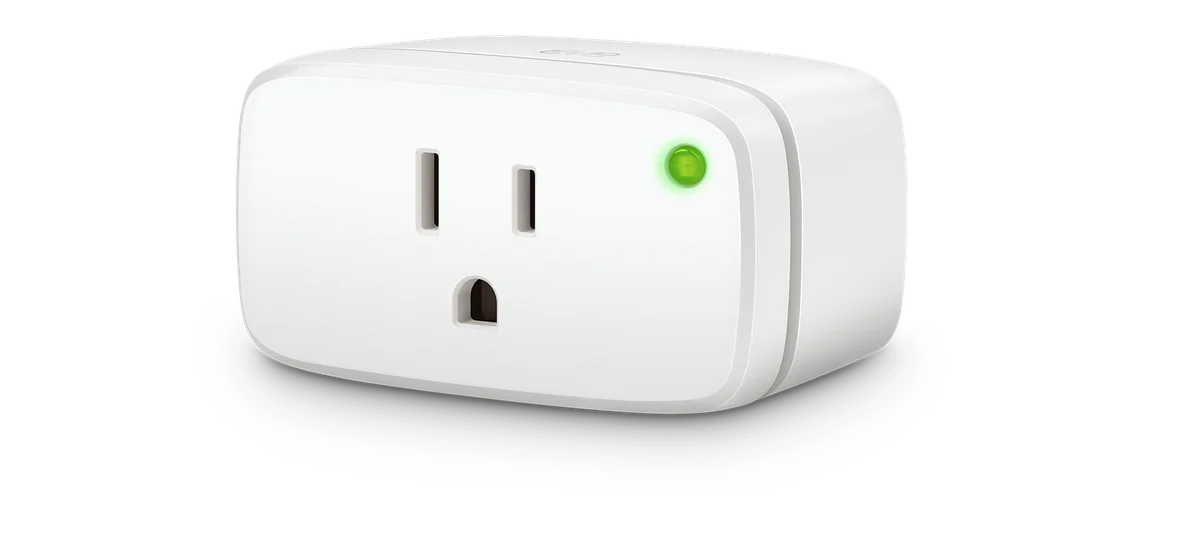 Image: Eve, US Eve Energy specifications.
Key specs: Network: Thread; Standard: Matter; US rating: 120V, 15A, 1800W; Energy monitoring: supported with compatible app/platform; Scheduling: device-stored schedules through Eve.
Eve Energy is the pick for a home that already has the right Thread infrastructure. It uses Thread rather than joining your Wi-Fi network directly. The new offer was $30.35; the cheaper Resale option was not used in this comparison.
You need a compatible Matter controller and Thread border router. Some home hubs combine those roles, but not every smart speaker does. Eve’s product page lists the supported setups; establish that match before buying the plug, otherwise the extra hub cost can overwhelm the small difference between outlet prices.
The Eve app provides the supported Apple Home and Google Home paths. Energy features depend on the platform and app version; check Eve’s current compatibility list. Device-stored schedules are a useful distinction: configured through Eve, they can run without the phone or an internet connection. That doesn’t mean remote control continues without the rest of the home system.
Skip it if you do not have a compatible Thread border router and only want one inexpensive Wi-Fi lamp switch. Tapo gets you to that simpler outcome without adding a Thread network.
What Energy Monitoring Can Actually Save
A meter gives you information. Savings only happen if that information leads to a useful change. For example, a hypothetical continuous 10W load uses 7.2 kWh over 30 days. At $0.20 per kWh, that’s $1.44 per month. This is arithmetic, not a measurement of one of these plugs or a promise about your devices.
That puts the economics in perspective. Switching off a small standby load won’t necessarily repay a collection of smart plugs quickly, and the plugs themselves use some electricity. Equipment that cycles on and off needs a representative measurement period, not a single wattage reading. Use your actual tariff and keep essential or sensitive equipment powered as its instructions require.
Convenience can still justify the purchase. A lamp that comes on before you get home doesn’t need a dramatic energy-saving claim to be useful. If you want dimming or color changes rather than simply cutting power, smart light bulbs are a different and often better solution. Likewise, permanent outdoor lighting needs controls designed for that installation, not an indoor plug left outside.
Who Should Buy What
- One lamp and the lowest upfront cost: Tapo P125M.
- Two outlets plus electricity-use data: Tapo P110M two-pack.
- An Alexa-only routine with no interest in Matter: Amazon Smart Plug, if the delivery date works.
- An existing Meross setup needing two Matter switches: MSS115 two-pack.
- A supported Thread home and device-stored schedules: Eve Energy.
FAQ
Will a smart plug work when the internet goes down?
It depends on the action and the setup. A physical button can still operate a powered plug, while remote access and cloud-based routines may stop. Local Matter control also depends on a functioning local network and controller. Eve specifically documents device-stored schedules; don’t assume every app schedule on every plug behaves the same way.
Does every Matter plug need a Thread border router?
No. Tapo P125M, Tapo P110M and Meross MSS115 use Wi-Fi. Eve Energy uses Thread and needs a compatible border router as well as a Matter controller. The platform’s controller requirement and the plug’s network transport are separate questions.
Can a smart plug dim a lamp or change a fan’s speed?
These models switch power on and off. They do not add dimming, change color or press an appliance’s controls. Use a compatible smart bulb, dimmer or purpose-built controller when that is the behavior you need, and follow the appliance manufacturer’s requirements.
Can I use these plugs outdoors?
These are indoor models. A covered porch does not turn an indoor device into weather-rated equipment. Choose an appropriately rated outdoor product and installation for an outdoor load, including the electrical protection required for that location.
Bottom Line
If the plug’s box says Matter but setup still asks for a hub, our Matter hub guide separates the controller from the Thread border router and shows which existing devices may already do those jobs.
The Tapo P110M two-pack is the useful all-round starting point at these prices: two outlets, electricity measurements and Matter. The P125M is enough when all you want is one lamp on a schedule. Before buying either, establish that restoring power actually makes your device do what you want. That’s the difference between convenient automation and another app button that doesn’t solve the problem.
This article contains affiliate links. PicksLab may earn a small commission at no extra cost to you. Our recommendations are based on the review method described in this article.