Affiliate disclosure: PicksLab earns commissions on qualifying Amazon purchases via the pickslab-20 tag, at no extra cost to you.
Ever looked up from your desk to find a delivery driver already at the window? A driveway alarm can give you a heads-up while someone is still on the approach. Put a sensor near the entrance and a receiver where you’ll hear it, and you don’t have to keep checking a camera feed just to know somebody has arrived.
The important choice isn’t the biggest distance printed on the box. It’s whether you want to hear about vehicles only, or people as well. A motion sensor can announce a visitor walking up the drive, but it may also announce the deer crossing it. A buried magnetic probe solves a different problem: it notices moving metal, not the person walking past.
TL;DR - Our top pick: The Dakota Alert DCMA-4000 is our starting point for a local chime that detects people and vehicles, with a complete kit at $69.99. For vehicle-only alerts, the Mighty Mule FM231 costs much less than Dakota’s probe kit if its shorter radio link suits your property. None of these is a guarantee that a visitor or intruder will be detected.
Price comparison
| Pick | Price checked 2026-11-01 | Why it belongs here | Main catch |
|---|---|---|---|
| HTZSAFE 807A + two T504 sensors | $52.99 | Solar sensors for two approaches; receiver has backup battery | Detects heat movement, including animals; solar may need manual charging |
| Dakota Alert DCMA-4000 | $69.99 | Local people/vehicle alerts with a long claimed radio link | Not vehicle-only; no phone alerts in this kit |
| Mighty Mule FM231 | $72.37 | Lower-cost buried vehicle sensor | Up to 400 ft sensor-to-receiver radio range |
| YoLink two outdoor sensors + SpeakerHub | $89.99 | Spoken alerts and phone notifications through a connected hub | Requires setup, internet for remote alerts and protected sensor placement |
| Dakota Alert DCPA-4K Plus, 50-ft probe cable | $259.99 | Vehicle-only probe with longer claimed radio reach and relay outputs | Costs $187.62 more than the Mighty Mule; requires burial |
These are observed new-item US offers, without applying coupons or Prime-only discounts. Tax, delivery and stock depend on destination and seller. Dakota’s offers were sold by Dakota Alert, HTZSAFE’s by HTZSAFE and YoLink’s by Yosmart, all shipped by Amazon; Mighty Mule was shipped and sold by Amazon.com. Verify the kit and seller again before checkout: a transmitter or extra receiver alone is not a complete system.
Two distances that should never share a column
Detection distance is how close the car or person must pass to the sensor. Radio range is how far the outdoor transmitter can communicate with the receiver. A one-mile radio claim does not mean the sensor watches a mile of road.
| System | What triggers it | Sensing distance / adjustment | Claimed radio reach | Where the alert arrives |
|---|---|---|---|---|
| HTZSAFE 807A/T504 | Heat movement | 25 / 50 / 70 ft settings | Up to 1/2 mile | Local receiver; four sensor channels |
| Dakota DCMA-4000 | People and vehicle motion | Up to 100 ft | Up to 1 mile | Local DCR-4000 chime |
| Mighty Mule FM231 | Moving metal mass | Probe alongside the lane; adjust using its manual | Up to 400 ft | Local chime; extra receivers available |
| YoLink starter kit | PIR motion | Manufacturer lists 30-40 ft maximum | Up to 2,034 ft open air for SpeakerHub | Configured speech, app and online notifications |
| Dakota DCPA-4K Plus | Moving vehicles over a magnetic probe | Approximately 10-12 ft from probe | Up to 1 mile | Local chime, two Form C relays and 12V output |
These are manufacturer specifications, not distances achieved in a field test. Hills, buildings, trees and receiver placement can shorten the radio path. The two Dakota kits use different sensors and receivers; don’t treat their outputs or expansion limits as interchangeable.
1. HTZSAFE 807A + two T504 solar sensors
Buy the HTZSAFE two-sensor kit on Amazon ->
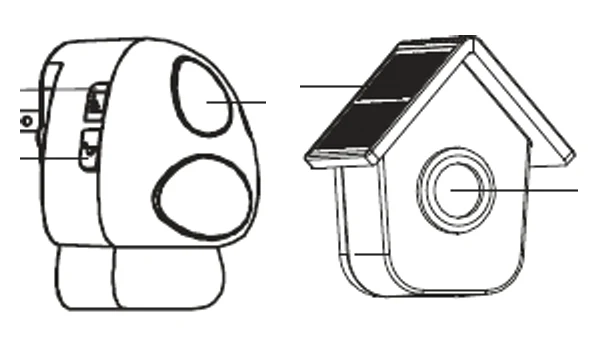 Manufacturer component drawings from the supplied HTZSAFE manual, not a photograph of the complete two-sensor bundle.
Key specs: Sensor settings: 25 / 50 / 70 ft; Radio claim: up to 1/2 mile; Receiver: four channels, 35 tones and backup battery.
At $52.99, HTZSAFE covers two approaches without buying a second sensor. Solar charging reduces battery changes, but prolonged poor light can still require USB charging. The manual calls for a four-hour charge and says a USB AC adapter isn’t supplied for that cable.
It’s a practical choice for two gates or a drive and footpath. Skip it when you want vehicle-only detection or phone alerts. This is a heat-motion system, not the brand’s separate beam-break system. Follow the manual’s placement instructions rather than aiming across moving bushes.
2. Dakota Alert DCMA-4000
Buy the Dakota Alert DCMA-4000 on Amazon ->
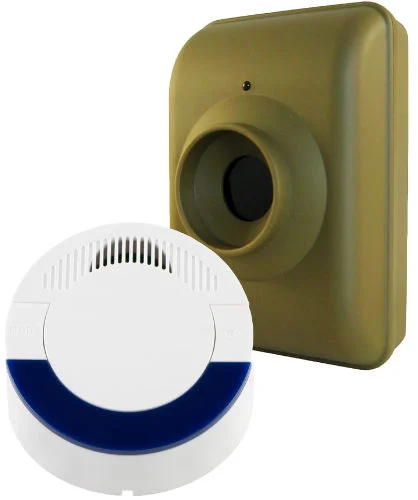 Image: Dakota Alert.
Key specs: Kit: DCMT-4000 transmitter and DCR-4000 receiver; Detection: up to 100 ft; Radio claim: up to 1 mile; Sensor power: one 9V battery, not included.
The DCMA-4000 gives you a straightforward indoor chime without an app or a Wi-Fi connection at the entrance. At $69.99, it’s the sensible starting point when you want to know about both a car arriving and someone walking toward the house.
Skip it if wildlife crossing the sensor would make the alerts useless. A motion detector doesn’t know whether the warm object is an expected guest. The manufacturer’s current DCMA-4000 description specifies the complete kit; it also lists a 12-sensor receiver limit, whereas the Amazon copy says 16. Use the receiver’s current manual before planning a larger installation. This DCR receiver is the chime option, not the relay-equipped RE-4K Plus.
3. Mighty Mule FM231
Buy the Mighty Mule FM231 on Amazon ->
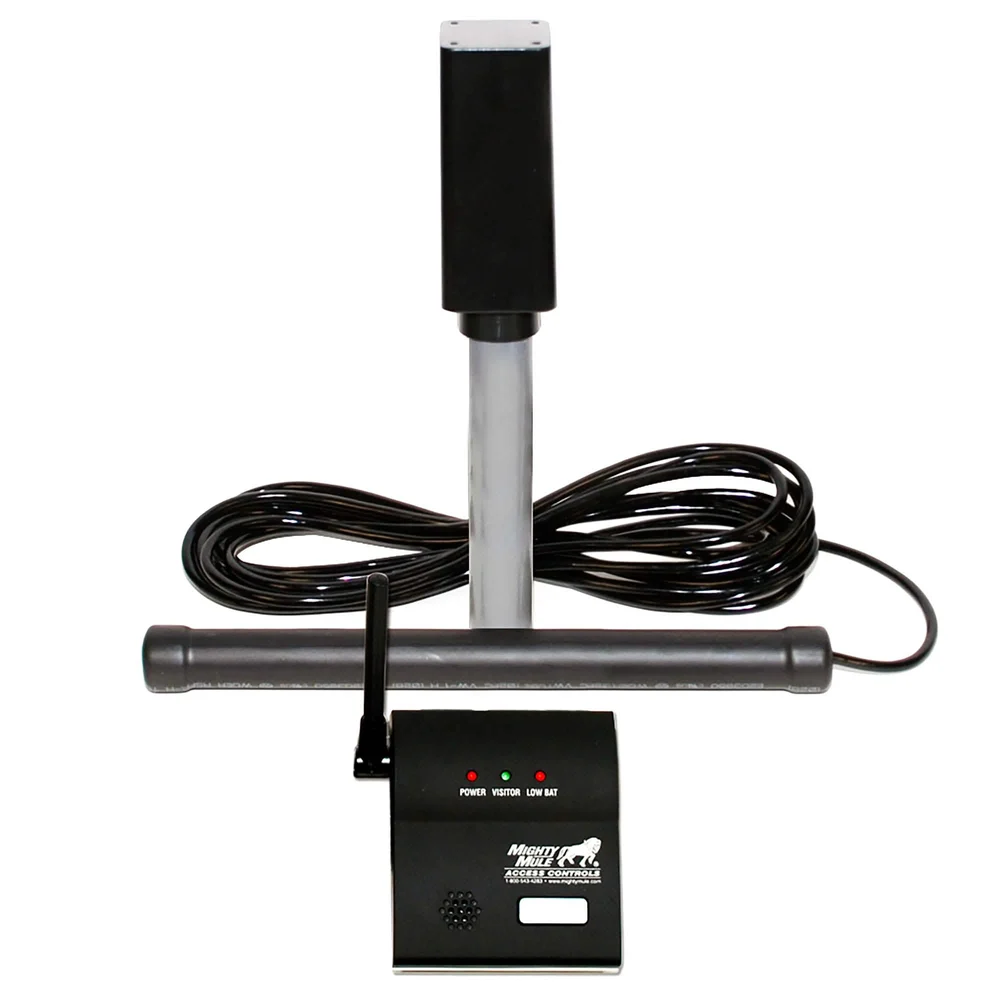 Image: Mighty Mule.
Key specs: Detection: electromagnetic vehicle sensing; Radio claim: up to 400 ft; Transmitter power: two AA batteries, not included; Receiver: plug-in indoor chime.
Mighty Mule is the lower-cost route to vehicle-only alerts when the transmitter can sit reasonably close to the house. At $72.37, it avoids paying for the Dakota probe system’s longer radio claim and relay outputs when neither would solve a problem you have.
The FM231 product page and installation manual describe a probe beside the driveway connected to the transmitter, with an indoor receiver and transformer. You don’t need a Mighty Mule gate opener. Additional FM231-R receivers can bring the chime to another room.
Skip it for pedestrian alerts or a radio path beyond its 400-ft claim. Test placement before burying the probe and cable, and check for underground utilities before digging. Magnetic sensing avoids an animal being the intended trigger; it doesn’t establish a zero-false-alarm guarantee or immunity to electrical interference.
4. YoLink two outdoor motion sensors + SpeakerHub
Buy the YoLink outdoor starter kit on Amazon ->
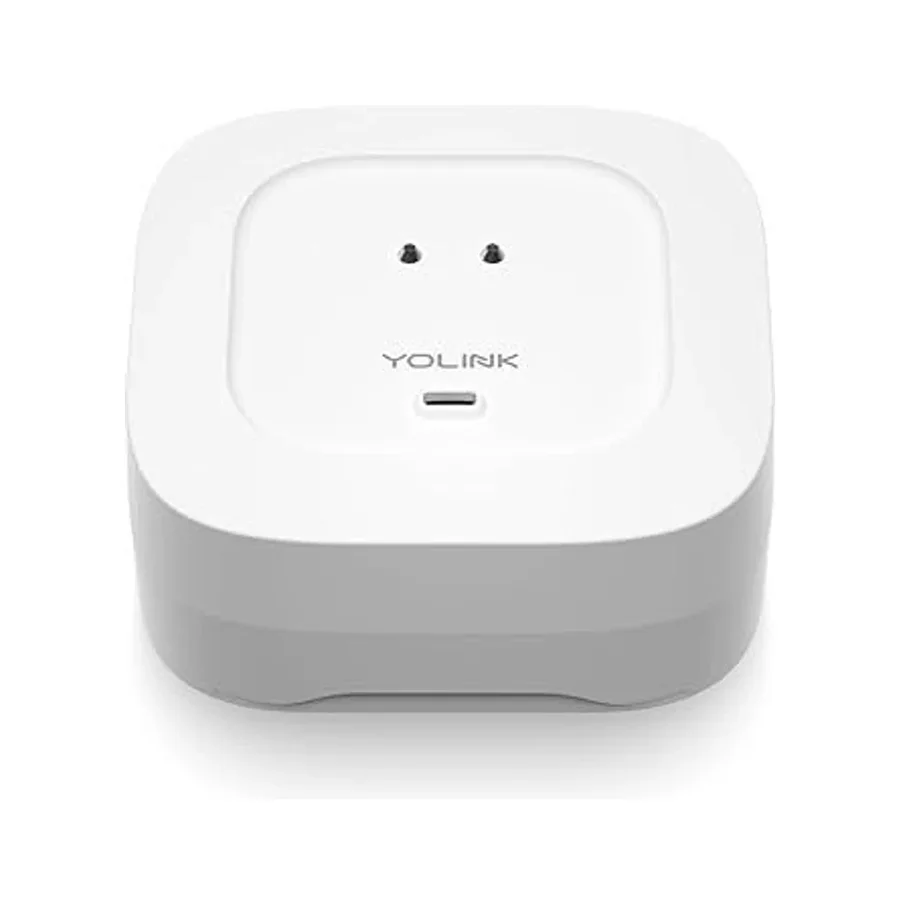
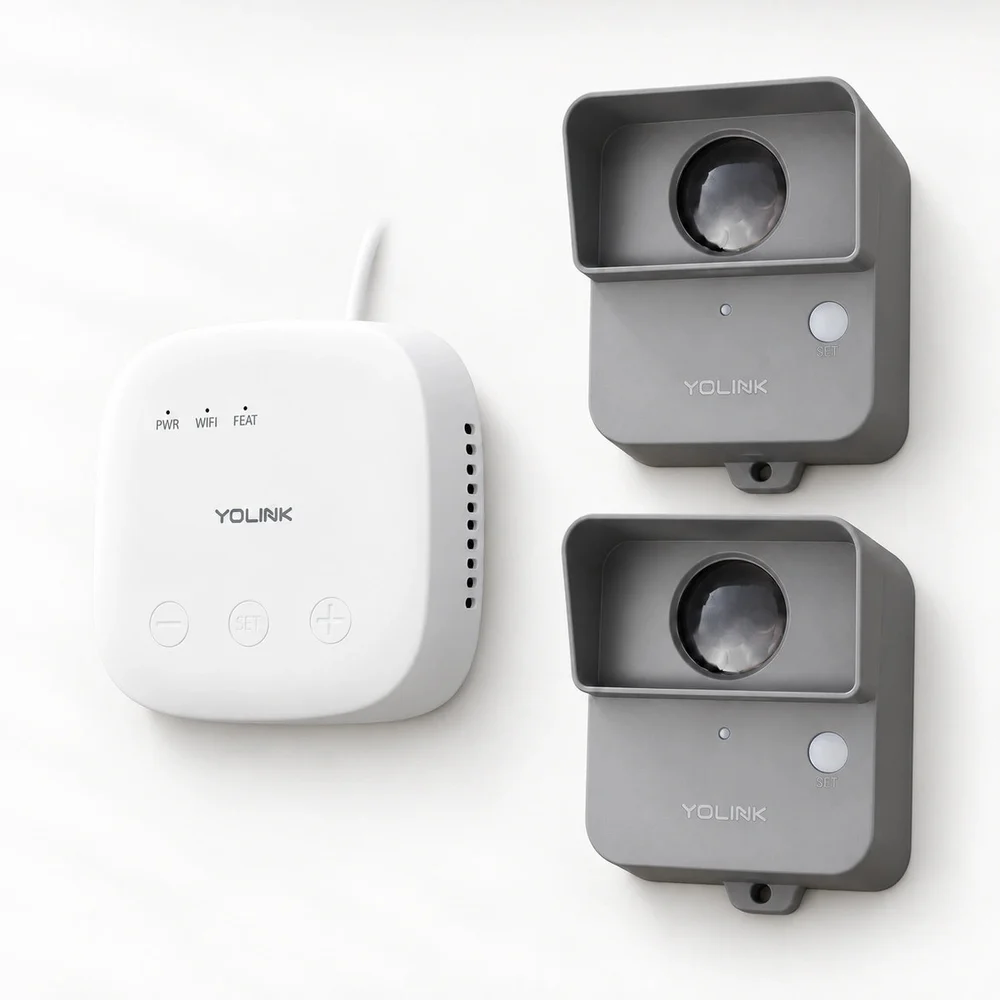 Image: YoLink starter kit.
Key specs: Kit: two YS7805 sensors and one YS1604 SpeakerHub; Detection: 30-40 ft maximum; Hub network: 2.4GHz Wi-Fi; Hub power: continuous USB power.
YoLink is the option here for someone who wants an alert while away, not just a chime inside an empty house. The $89.99 bundle includes the speaking hub, so a first-time buyer isn’t left with sensors and nothing to receive their messages. You can configure different spoken announcements for the two approaches.
Setup uses the YoLink app and account; SpeakerHub needs 2.4GHz Wi-Fi and internet for remote notifications. Use the official YoLink app/support route, sensor guide and SpeakerHub guide. The sensor’s long radio link isn’t a requirement to extend your home Wi-Fi all the way to the gate. Don’t assume a cloud-configured spoken alert will work during an internet outage just because some other YoLink devices offer device-to-device pairing.
Skip this kit for a fully exposed gatepost or an installation that must be independent of internet service. The sensor specification page lists IP66, while the current Amazon offer explicitly says to protect it from direct rain, condensation and moisture. The manual recommends overhead protection. Treat that conflict conservatively: use a dry, sheltered location and confirm suitability with YoLink before buying for an exposed entrance. Also check current SMS allowances rather than assuming unlimited texts are free.
5. Dakota Alert DCPA-4K Plus with 50-ft probe cable
Buy the Dakota Alert DCPA-4K Plus on Amazon ->
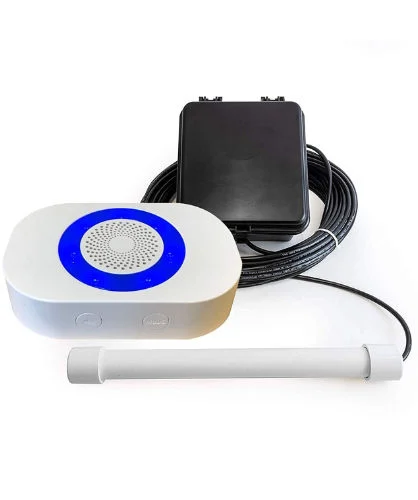 Image: Dakota Alert.
Key specs: Kit: DCPT-4000 and RE-4K Plus; Sensor power: three included CR123A batteries; Radio claim: up to 1 mile; Outputs: two Form C relays and one 12V output.
Dakota’s $259.99 probe kit makes sense when you need vehicle-only detection and the Mighty Mule’s radio specification is too short for your layout. It costs $187.62 more, so there should be a concrete reason for that upgrade rather than a vague feeling that a more expensive alarm must be better.
The vehicle-probe explanation puts sensing at approximately 10-12 ft from the buried probe. The checked Amazon kit supplies 50 ft of cable between probe and transmitter, which helps you put the radio box in a better position while keeping the probe beside the lane. Dakota also sells no-probe and different cable-length configurations; those aren’t the same purchase.
The current three-battery transmitter manual and kit description establish the hardware. Skip it if you need pedestrian detection or expect phone alerts out of this box. Its relay contacts are connections for separately compatible equipment, not a ready-made app integration or authority to wire mains devices.
Plan the warning time, then test the radio path
Suppose the detection point is 200 ft before the house. At a steady 10 mph, that is about 13.6 seconds of travel; at 5 mph, about 27.3 seconds. Calculation: speed in mph multiplied by 5,280/3,600 gives feet per second; divide 200 by that result. These are hypothetical travel times, before sensing, radio, app or human-response delays, not measured warning times.
Now suppose the transmitter is 300 ft from the indoor receiver. That is a separate measurement. A product may have enough sensing reach across your lane yet fail to communicate through the slope and walls between those two points. Buying a bigger detection number doesn’t fix a blocked radio path.
Before drilling or burying anything:
- Put the receiver in the room where you’ll actually use it, with doors and windows normally closed.
- Temporarily position the transmitter at the intended height and location. Test the real vehicle in both directions, plus pedestrians if those alerts matter.
- Repeat with ordinary household noise and appliances running. Check whether the chime is audible where you work or sleep.
- Aim PIR sensors away from the public road and moving vegetation. For solar units, check panel exposure as well as the sensor’s view.
- For a connected kit, test the phone notification away from home and deliberately check what remains available when internet or power is absent.
Don’t turn one successful pass into a reliability claim. Repeat the acceptance checks after installation and after conditions change. A camera from our outdoor-camera guide can help identify what caused an alert; a doorbell camera solves the different job of seeing and speaking to someone at the door.
Who should buy what
- People and vehicles, simple indoor chime: start with Dakota DCMA-4000.
- Two sunny approaches without battery swaps as the normal routine: consider HTZSAFE’s two-sensor kit, allowing for manual charging.
- Cars, not wildlife: Mighty Mule FM231 for a shorter radio path; Dakota DCPA-4K Plus when its longer claimed reach or outputs justify the expense.
- Phone alerts from sheltered outdoor positions: YoLink’s SpeakerHub kit, with its network and weather limitations understood.
For alerts about an opening gate rather than movement near it, a contact sensor is another approach. A driveway alarm doesn’t replace a lock, camera or monitored security system; our guest-access lock guide covers the access-control side.
FAQ
Will a driveway alarm ignore deer?
A magnetic vehicle probe is the relevant starting point because it detects moving metal rather than animal heat. PIR models can detect large animals. Neither technology supports a blanket promise of no unwanted alerts; placement and environmental interference still matter.
Does a one-mile alarm detect cars a mile away?
No. That figure describes the claimed transmitter-to-receiver radio link. The sensor’s local detection distance is much shorter, and the installed radio range depends on terrain and obstacles.
Can I get driveway alerts without Wi-Fi?
The Dakota, Mighty Mule and HTZSAFE local-chime kits operate without home Wi-Fi for their described alert function. The YoLink bundle uses a connected SpeakerHub for app notifications. Local radio communication and remote internet access are different requirements.
Is a driveway alarm a security camera?
No. These kits report a detection event, not an identity or recording. If you need to know who arrived, or review an incident later, choose a camera and storage arrangement separately. Avoid paying for phone connectivity when a local chime is all you need.
Bottom line
For a straightforward heads-up inside the house, start with the Dakota Alert DCMA-4000. If wildlife is the reason you’re shopping, start with the vehicle-only choices instead. Measure the radio path, check the complete kit, and test it in place before making the installation permanent. That matters more than picking whichever listing shouts the longest distance.
This article contains affiliate links. PicksLab may earn a small commission at no extra cost to you. Our recommendations are based on the review method described in this article.