Affiliate disclosure: PicksLab earns commissions on qualifying Amazon purchases, at no extra cost to you.
TL;DR - Our top pick: The FoodSaver VS2150 is our researched pick for ordinary freezer portions because its removable drip tray and built-in bag cutter address the cleanup and bag-making work you repeat every session. Choose a chamber machine instead if sealing liquid soup without pre-freezing is the main job.
A vacuum sealer should fit what goes into your freezer, not just the space beside it. Dividing chicken into dinner portions, packing fragile baked goods, and bagging broth are three different jobs. A stronger pump is not automatically the answer to all three.
Quick Comparison
| Pick | Best For | Key Difference |
|---|---|---|
| FoodSaver VS2150 | Routine freezer portions | Removable, dishwasher-safe drip tray |
| NESCO VS-12 | Small batches needing suction control | Gentle pressure, pulse, and optional double seal |
| Anova Precision Vacuum Sealer Pro | Double-sealed bags for freezer and sous vide prep | Double sealing plus roll storage and cutter |
| VacMaster VP195 | Soup portions and occasional long bags | Chamber and external suction in one machine |
| Avid Armor USV20 | Small liquid portions under upper cabinets | Dry-pump chamber; 17-inch open-lid clearance |
Match the Machine to Your Meal Prep
Mostly solid portions: An edge sealer keeps the food-filled part of the bag outside the machine and draws air through the opening. FoodSaver, NESCO, and Anova suit this route. You need compatible textured vacuum bags or rolls, not ordinary storage bags or smooth chamber pouches. Choose roll storage for variable portions; pre-cut bags remove a bag-making step.
Broth, soup, or loose marinade: A chamber machine evacuates the chamber around the bag, allowing appropriate liquid packaging without drawing the contents through an external suction channel. The tradeoff is physical: the filled pouch must fit inside. VacMaster’s VP195 documentation and Avid Armor’s USV20 specifications establish different pouch limits. Neither a 12-inch seal bar nor a 12-inch empty pouch means a bulky 12-inch food container will fit.
Only occasional soup: Do not buy a chamber sealer just for one pot a month. FoodSaver’s VS2100-series manual directs users to pre-freeze soups and liquids before bag sealing. Freeze suitable portions first, then seal them with an edge machine. Its Moist setting is for moist or juicy food, not permission to vacuum a bag full of liquid. Cool and handle food safely before packaging.
| Model | Bag / Pouch Fit | Controls That Matter | Batch or Ownership Limitation |
|---|---|---|---|
| FoodSaver VS2150 | FoodSaver 8- and 11-inch rolls | Dry/Moist; Seal button can end suction early | Manual specifies 20 seconds between seals |
| NESCO VS-12 | Textured bags up to 11.8 inches wide | Normal/Gentle; pulse; Dry/Moist/Double | Manual recommends two minutes between uses |
| Anova Sealer Pro | Compatible embossed vacuum bags and rolls | Double seal; low-pressure wet-food setting | Advertised continuous-seal capacity is not a measured speed or reliability result |
| VacMaster VP195 | Up to 12 x 12-inch chamber pouches; longer textured bags externally | Chamber or external mode | External mode still has an edge sealer’s liquid limitation |
| Avid Armor USV20 | Up to 11 x 10-inch chamber pouches | Adjustable vacuum and seal times | Three-inch chamber height limits bulky portions |
The chamber picks serve different constraints: VP195 handles longer bags externally, while USV20 suits smaller portions and tighter cabinet clearance. Neither automatically earns its extra expense over an edge sealer for basic portioning.
How We Chose
This is a research-based comparison, not a hands-on durability or freezer-storage test. We checked exact-model manufacturer documentation, operating instructions, bag requirements, and active new-product Amazon offers on September 10, 2026. Our scenario comparison weighs cleanup, liquid handling, and batch restrictions; it does not rank measured vacuum strength or promise a particular shelf-life extension. Customer complaints informed the limitations we considered, but cannot establish failure rates.
1. FoodSaver VS2150
Buy FoodSaver VS2150 on Amazon ->
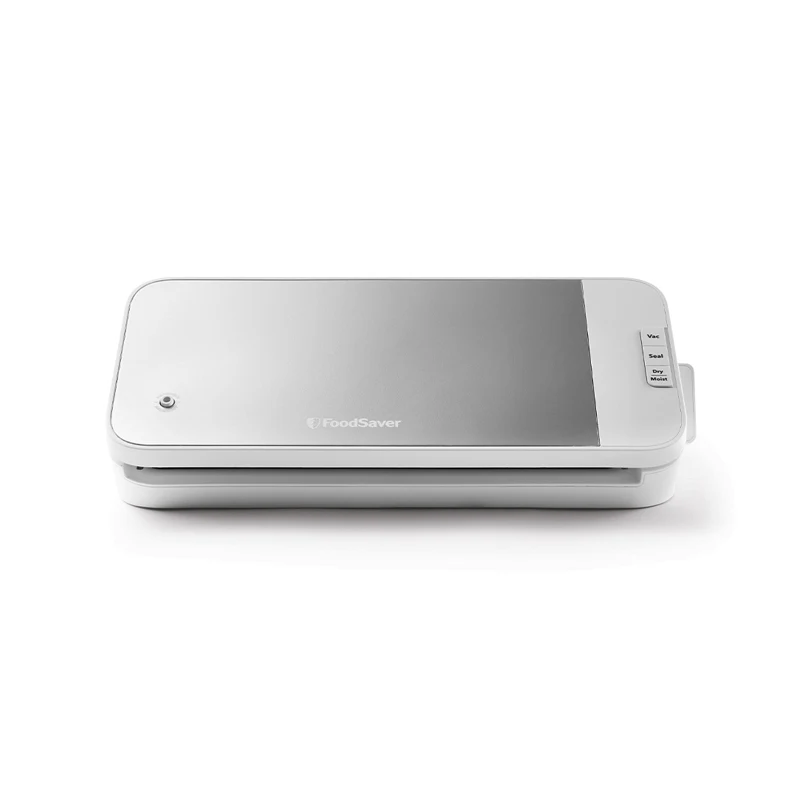
Image credit: FoodSaver, VS2150 manual directory.
Key specs: Modes: Dry and Moist; Bag making: integrated roll storage and cutter; Cleanup: removable top-rack-dishwasher-safe drip tray; Cooldown: 20 seconds between seals.
Choose it for freezer portions when removable-tray cleanup matters more than elaborate pressure settings. Meat juices in a fixed channel are an awkward end to a prep session; this tray lifts out. The manufacturer manual, printed pages 5-11, also explains how the Seal button interrupts suction before a delicate item is fully compressed. That is useful control, though not the same interface as NESCO’s dedicated pulse button.
The verified VS2150 offer includes a starter roll, four pre-cut bags, and a handheld attachment with hose. Containers and jar accessories are additional purchases, not part of that starter kit. The quick-start guide distinguishes zipper-bag and container use from heat-sealed freezer bags. Do not assume every accessory bag is suitable for freezing.
Skip it if you want to seal unfrozen soup directly in bags. Its modest cooldown is convenient for ordinary portions, but not evidence of commercial throughput. The current new offer was fulfilled by Amazon and sold by a third party; inspect the seller and return terms before buying. For the chopping stage before portioning, our food processor comparison separates bowl size from the slicing and shredding attachments actually included.
2. NESCO VS-12
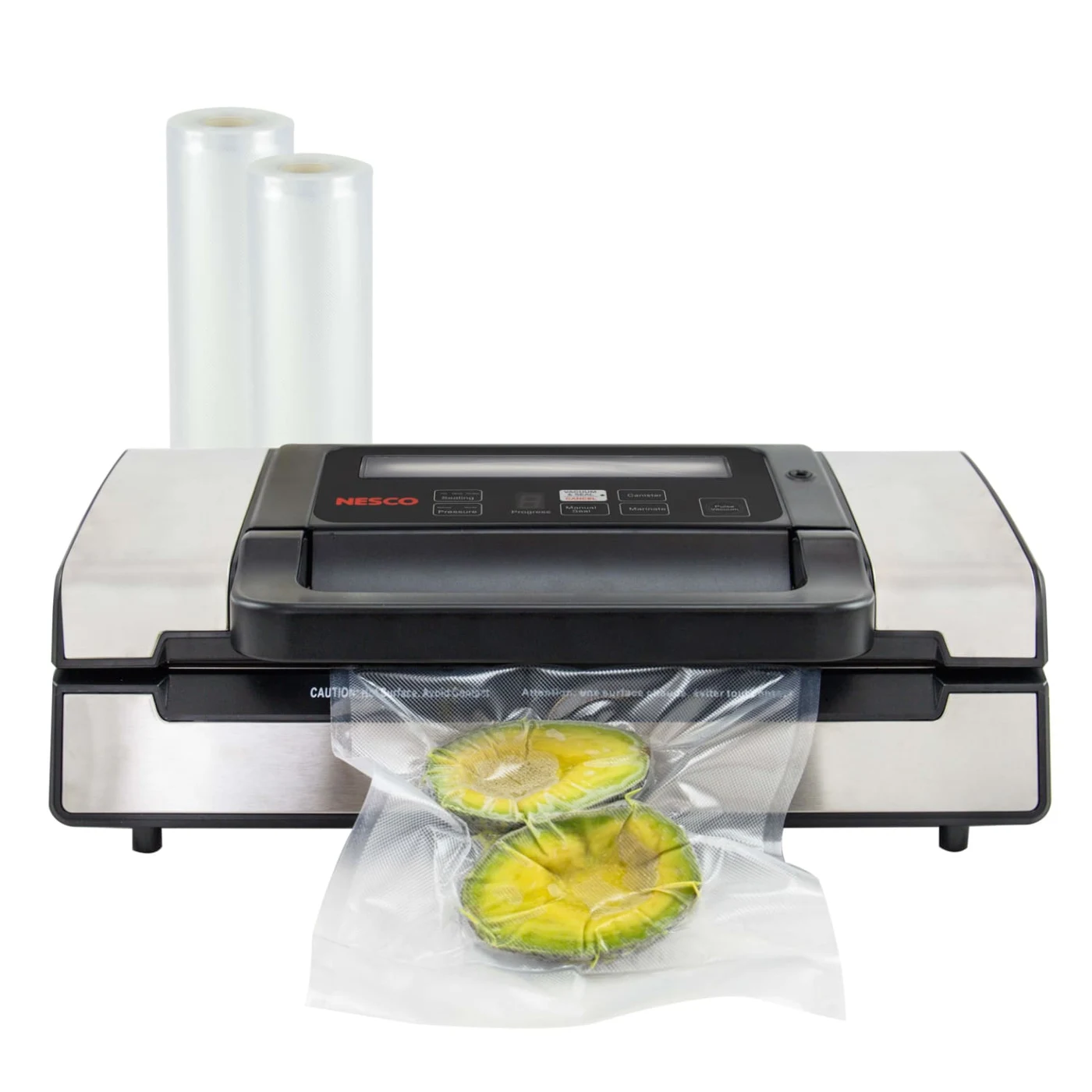
Image credit: NESCO. Food and bags shown are manufacturer demonstration media.
Key specs: Power: 130 watts; Pressure: Normal and Gentle; Sealing: Dry, Moist, and Double; Manual control: pulse vacuum.
Choose it for small mixed batches where controlling compression is the priority. A bag of soft rolls is not the same task as a dense steak: Gentle pressure and the pulse button give you ways to stop before the contents flatten. The VS-12 care guide documents those controls, rather than asking buyers to infer their function from button photos.
Skip it for uninterrupted bulk sealing: NESCO recommends two minutes between uses. That is the important qualification to its double-pump marketing. The guide also says to store the machine unlocked to avoid compressing the gaskets. It offers useful control, not a verified shortcut through dozens of back-to-back portions.
NESCO’s current sales page uses the VS-12P SKU while its description and linked manual identify VS-12. This recommendation is for the Amazon VS-12 listing and the documented VS-12 controls, not an assumed separate new generation. The page lists an 11.8-inch bag-width limit; use embossed vacuum-sealer material, not smooth chamber pouches.
3. Anova Precision Vacuum Sealer Pro
Buy Anova Precision Vacuum Sealer Pro on Amazon ->
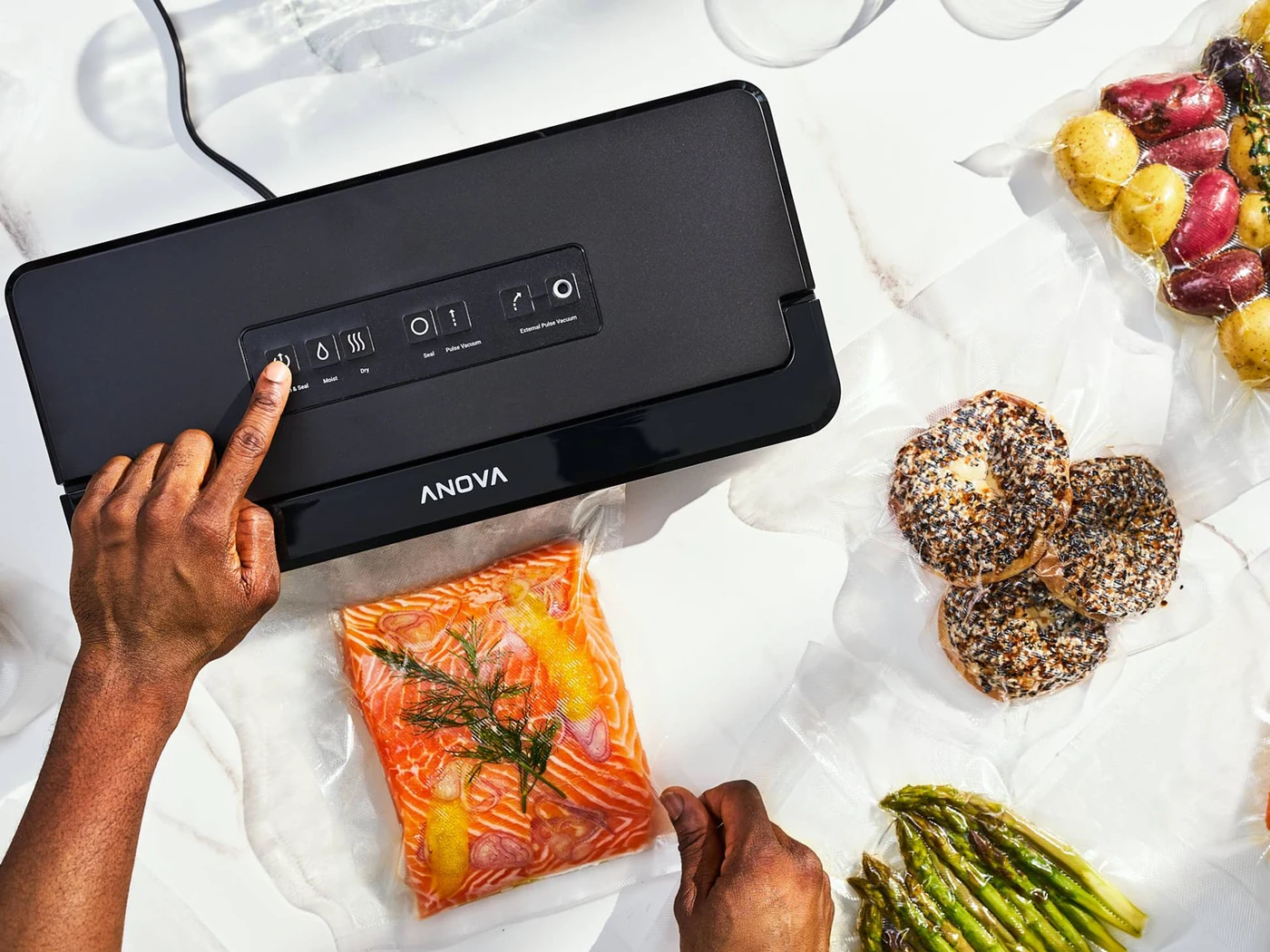
Image credit: Anova Culinary. Manufacturer demonstration, not PicksLab testing.
Key specs: Power: 110 watts at 120 volts; Sealing: double seal; Bag making: built-in roll storage and cutter; Accessories: vacuum port and included hose.
Choose it when double sealing and integrated bag preparation are your main requirements. The Pro is an edge sealer, not Anova’s separate chamber model. Its official product page documents a low-pressure function for wet foods and a clamp designed for one-handed use. These are convenience features for preparing compatible bags; they do not establish superior long-term seal retention.
Skip it if your purchase depends on proven continuous-batch reliability. Anova advertises more than 100 continuous seals, but we have not tested that claim. Its own published customer feedback includes sealing and durability complaints alongside positive reports. Those anecdotes do not quantify a failure rate, but they are a reason not to call this an endurance winner. The verified Amazon offer was from a third-party seller, so confirm support and return eligibility rather than assuming the manufacturer’s direct-store terms apply.
4. VacMaster VP195
Buy VacMaster VP195 on Amazon ->
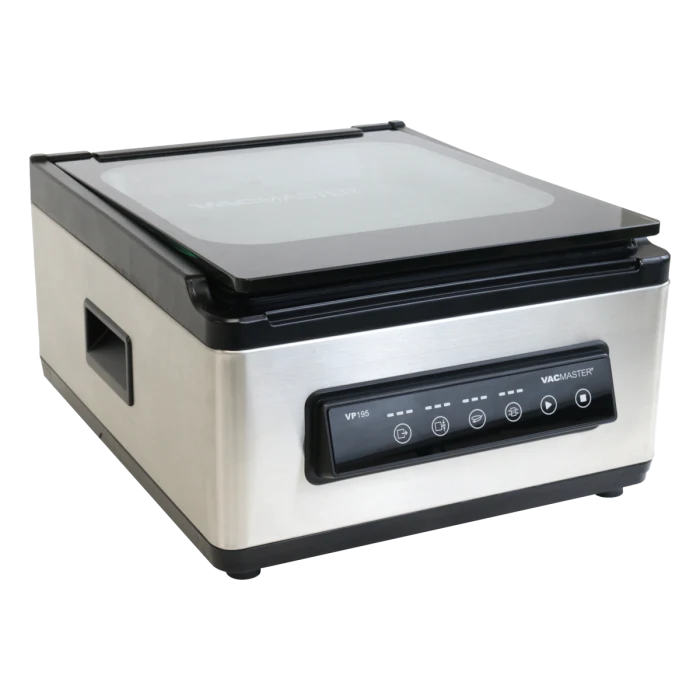
Image credit: VacMaster.
Key specs: Sealing: chamber and external suction; Seal bar: 12 inches; Maximum chamber pouch: 12 x 12 inches; Pump: dry type.
Choose it for liquid portions plus occasional bags too long for a chamber. That combination is the VP195’s reason to exist in a home kitchen. Use chamber mode for suitable soup portions; use external suction for longer solid-food packages. VacMaster’s product specifications list a 17.5 x 14.75 x 9-inch body and 30-pound weight. Plan a real work area, including room to open the lid.
Skip it if you expect one bag type to work in both modes. VacMaster’s bag-and-machine bundle explanation distinguishes smooth chamber pouches from textured external bags. Buying a cheap box of smooth pouches does not equip the external mode. Nor does external mode let you hang a bag of soup outside the machine: the liquid-handling advantage belongs to the chamber process.
The dry pump avoids oil changes, but not cleaning or all heat-management limits. VacMaster’s maintenance guidance cautions that dry-pump machines need cooldown breaks. We do not have a verified sustained-throughput result for this model. Its dual-mode flexibility is useful; a commercial-sounding description is not proof it can run indefinitely.
5. Avid Armor USV20
Buy Avid Armor USV20 on Amazon ->
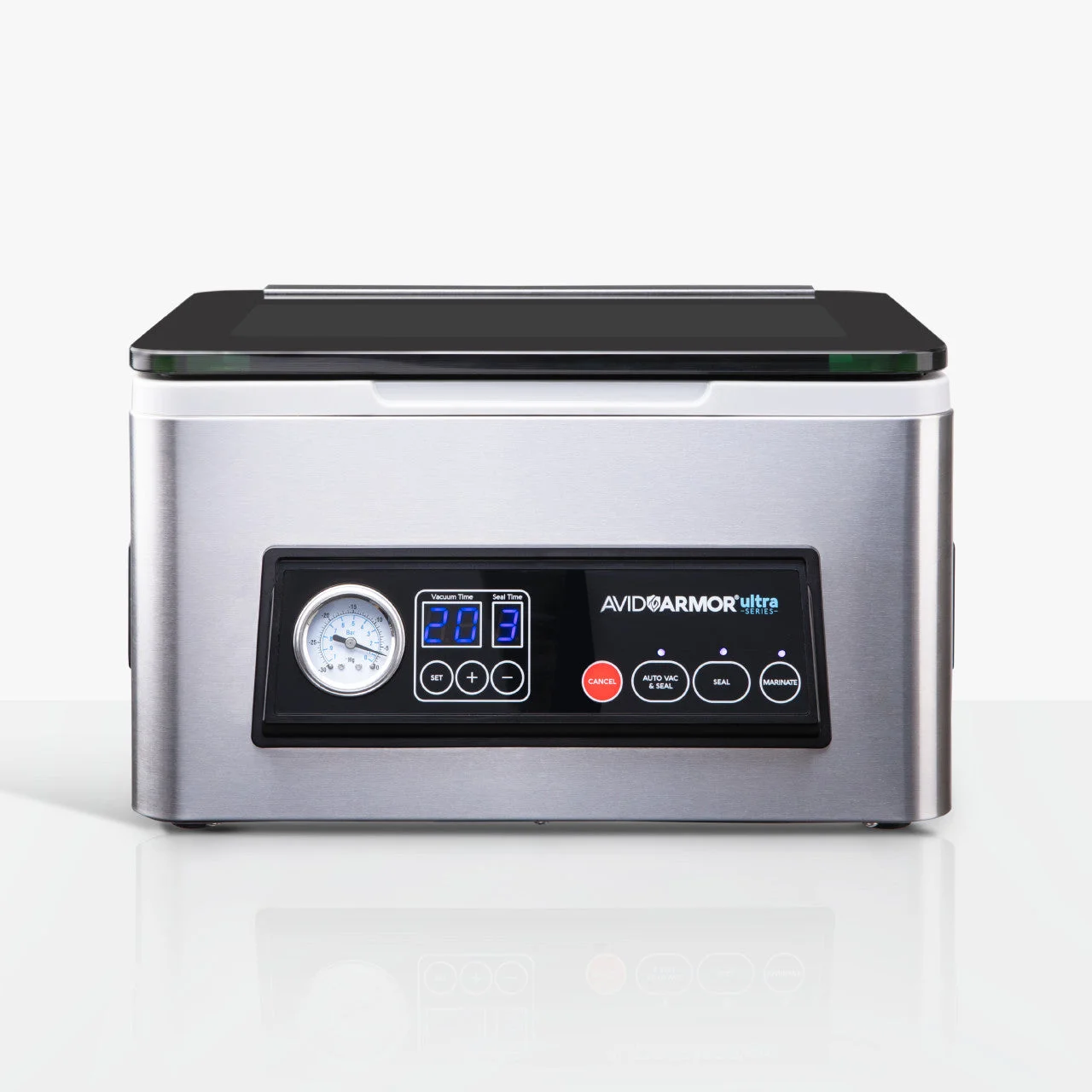
Image credit: Avid Armor.
Key specs: Seal bar: 11.5 inches; Maximum pouch: 11 x 10 inches; Chamber height: 3 inches; Open-lid clearance: 17 inches; Pump: dry, oil-free.
Choose it for small liquid portions when overhead clearance matters. Measure the gap beneath your cabinets before buying; a machine that fits with its lid shut may not open there. The manufacturer specifications establish its clearance and shallow chamber. This is a fit-based recommendation, not a tested durability verdict.
Skip it for bulky roasts or portions that exceed the chamber. Choose the VP195 for longer bags handled externally. Avid Armor’s bag guidance permits ordinary compatible vacuum-sealer bags but recommends smooth chamber pouches; the filled bag still needs to fit, so existing bags may need resizing. The replacement offer was sold by Avid Armor and shipped by Amazon when checked.
Who Should Buy What
- Ordinary freezer portions and easy cleanup: start with the FoodSaver VS2150.
- Small batches of delicate and dense foods: choose the NESCO VS-12 if its cooldown fits your pace.
- Double seals without a chamber machine: consider the Anova Pro, without assuming tested endurance.
- Regular soup portions plus long solid-food bags: choose the VP195 and buy the right consumables for each mode.
- Small liquid portions beneath upper cabinets: consider the USV20 after checking lid clearance and filled-pouch fit.
FAQ
Does vacuum sealing make homemade food shelf-stable?
No. USDA guidance on vacuum-packaged foods says perishables still require refrigeration at 40 F or below, or freezing at 0 F. Removing air does not eliminate organisms that grow in low-oxygen conditions. For dried harvests, use an appropriate drying process first; our food dehydrator guide covers drying-area and temperature distinctions. A vacuum sealer is packaging equipment, not a substitute for validated preservation.
Can I seal soup with a normal vacuum sealer?
For the edge machines here, pre-freeze the liquid portion and keep the sealing area clean and dry, following the appliance manual. A chamber machine is the more direct route when liquid packaging is a regular job, provided the filled pouch fits and you follow its liquid procedure. Moist mode and chamber operation are not interchangeable.
Can every vacuum sealer use the same bags?
No. External suction needs the air channels provided by compatible textured bags. Chamber machines can use the appropriate smooth chamber pouches. The VP195’s two modes therefore need different bag selections. For sous vide or reheating, separately verify the bag maker’s temperature and cooking-use instructions; “vacuum compatible” alone is not a cooking specification.
Will a vacuum sealer save money for occasional meal prep?
Not necessarily. If you already rotate food quickly and rarely discard freezer-burned portions, freezer bags or suitable containers may be enough. A sealer becomes more useful when repeated portioning and longer freezer storage solve a real problem in your household. We have not measured savings or assigned a payback period to any of these machines.
For homemade bread, matching the batch to your appetite is another option before buying more packaging equipment. Our beginner bread-machine comparison distinguishes one-pound machines from models whose loaf selections start at two pounds.
Bottom Line
Buy for the food you actually package. The FoodSaver VS2150 is our default for ordinary freezer portions because bag making and cleanup are part of every session. Move to a chamber machine for a recurring liquid-packaging need, not because it sounds more powerful. Check bag fit, required consumables, and the current seller before ordering.
This article contains affiliate links. PicksLab may earn a small commission at no extra cost to you. Our recommendations are based on the review method described in this article.