Affiliate disclosure: PicksLab earns commissions on qualifying Amazon purchases via the pickslab-20 tag, at no extra cost to you.
Your computer already has a headphone jack. Why put another box on the desk? Maybe your wired headphones run out of usable volume, the front-panel jack picks up noise, or you’re tired of reaching behind a monitor to switch between headphones and speakers. A desktop DAC/headphone amp gives that job its own connections and a volume knob you can reach.
The useful difference isn’t which box has the most impressive DAC chip. It’s whether the box accepts your source and sends sound where you need it. Four of these are playback devices, not microphone interfaces. The Creative X5 adds recording connections; the FiiO K7 accepts an existing analog source; TOPPING adds more elaborate EQ and speaker controls. Those differences can matter more than the next step up in price.
TL;DR - Our top pick: The FiiO K11 is our starting point for a computer, wired headphones and powered speakers. It has the essential digital inputs and two headphone connections at the lowest checked price here. Keep your current output if it’s already quiet and comfortably loud; a separate DAC isn’t an automatic sound-quality upgrade.
Five DAC/Amps and Their Checked Prices
| Product | Price checked November 18, 2026 | What you get beyond a headphone jack | Main limit |
|---|---|---|---|
| FiiO K11, standard Black | $142.99 | USB-C, optical/coaxial input and RCA line output | No analog input or microphone capture |
| FiiO K7, standard Black | $219.99 | RCA analog input as well as digital sources | Not the Bluetooth K7 BT |
| iFi ZEN DAC 3, Dark Gray | $229.00 | USB-powered setup and physical bass control | USB is its only audio input |
| Creative Sound Blaster X5 | $284.99 | Microphone input, recording controls and desktop software | More configuration; no XLR mic input |
| TOPPING DX5 II, Black | $299.00 | Parametric EQ, remote and balanced XLR line outputs | No analog input or microphone capture |
These are ordinary new-item snapshots, not rewards, financing, business pricing or proof of a Black Friday discount. K11 was sold by FiiODirect, fulfilled by Amazon; K7 by Kellards; iFi by WORLD WIDE STEREO; X5 by Creative Labs, fulfilled by Amazon; DX5 II by Toppingaudio, fulfilled by Amazon. Shipping, tax, sellers and stock can change. The TOPPING link resolved to its Black variant during checking.
Inputs, Outputs and Microphones Compared
| Product | Audio into the box | Wired headphones | To powered speakers or an amplifier | Microphone capture |
|---|---|---|---|---|
| FiiO K11 | USB-C, optical, coaxial | 6.35mm; balanced 4.4mm | RCA line output | No |
| FiiO K7 | USB-B, optical, coaxial, RCA analog | 6.35mm; balanced 4.4mm | Fixed/variable RCA | No |
| iFi ZEN DAC 3 | USB-C | 6.35mm; balanced 4.4mm | Fixed/variable RCA or rear balanced 4.4mm | No |
| Creative X5 | USB-C, optical, RCA, Bluetooth receiver | 3.5mm/headset; balanced 4.4mm | RCA or optical | 3.5mm mic/headset; compatible USB audio through host port |
| TOPPING DX5 II | USB, optical, coaxial, Bluetooth receiver | 6.35mm; balanced 4.4mm and four-pin XLR | Fixed/variable RCA or balanced XLR | No |
Trace the Connection Before Buying the Box
Start at the source and follow the signal to your ears. A laptop can send digital audio over USB to any of these, but a CD player’s optical output rules out the USB-only iFi. A turntable with a line-level output can feed the K7 or X5. A bare phono cartridge still needs a suitable phono preamp; an RCA socket alone doesn’t provide that function.
Then check the headphones. An ordinary 3.5mm stereo plug uses a suitable 6.35mm adapter on the FiiO, iFi or TOPPING single-ended socket. It does not belong in a balanced headphone output through a cheap wiring adapter. TOPPING’s manual, precautions section explicitly prohibits balanced-to-single-ended adapters. A proper balanced headphone cable must match the headphones’ wiring, not just fit the socket.
Finally, consider the speakers and microphone. Line output feeds powered speakers or another amplifier, not passive bookshelf speakers. Use variable/preamp mode when this box must control speaker volume; fixed output expects volume control downstream. XLR line outputs aren’t XLR microphone inputs. For an XLR podcast mic, our audio-interface comparison addresses the recording job.
Bluetooth headphones already contain their own DAC and amplifier. Their normal Bluetooth connection doesn’t use the headphone amplifier on your desk. And if your current wired output is clean, loud enough and convenient, different headphones or better placement of your powered speakers may address the complaint more directly.
1. FiiO K11: The Straightforward Wired Desk

Image: FiiO. Available finishes shown, not a three-unit package.
Price checked: $142.99 new on November 18, 2026.
Key specs: Digital inputs: USB-C, optical and coaxial; Headphone outputs: 6.35mm and balanced 4.4mm; Gain settings: three; Power: external 12V/2A supply.
The K11 covers the computer-to-headphones job without charging for Bluetooth or recording features. Its display shows the selected settings, while RCA line output gives powered speakers a connection. This is the lowest-priced checked route here to separate headphone volume control and multiple digital sources.
FiiO’s package list includes the power adapter, USB-A-to-C cable and 6.35mm adapter. A USB-C-only computer may need a different data cable. Use the K11 support center for driver and setup instructions. Basic Windows 10-or-later USB playback has a driver-free mode; higher-rate playback may require FiiO’s driver. Mac setup selects the K11 as the output device.
There’s no analog input or microphone capture. Use the K7 for an existing analog source, or keep a separate USB microphone for calls. This is the standard K11, not K11 R2R.
2. FiiO K7: Keep an Analog Source in the Setup
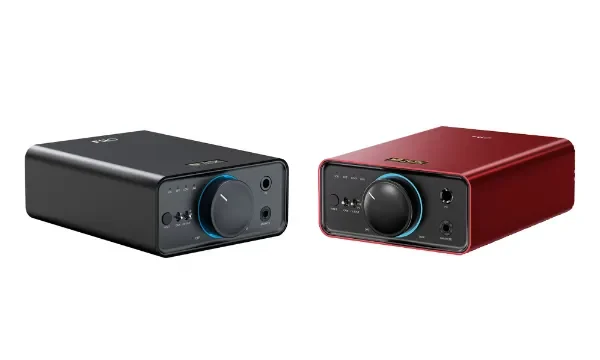
Image: FiiO Japan. Two finishes of the standard non-Bluetooth K7; the linked US offer is one Black unit.
Price checked: $219.99 new on November 18, 2026.
Key specs: Inputs: USB-B, optical, coaxial and RCA analog; Headphone outputs: 6.35mm and balanced 4.4mm; Gain settings: two; Dimensions: about 120 x 168 x 55mm.
The K7 earns its place when the desk has an analog source as well as the computer. RCA input accepts a line-level signal, and the front controls select headphone playback or rear line-output modes. You’re paying for a different connection plan, not just another DAC chip.
FiiO documents the connections and included power adapter/USB cable. Follow its computer setup and driver instructions. FiiO specifies its USB DAC driver for Windows; macOS needs the correct output selected rather than that Windows driver. PO selects headphones; PRE and LO provide volume-controlled and fixed line output.
Don’t pay extra for analog input if all your sources are digital. There’s no microphone capture, and this particular offer is the standard K7, not K7 BT. Bluetooth features on FiiO’s shared product page don’t turn this version into a wireless receiver.
3. iFi ZEN DAC 3: A USB Desk With a Bass Button
Buy iFi ZEN DAC 3 on Amazon ->
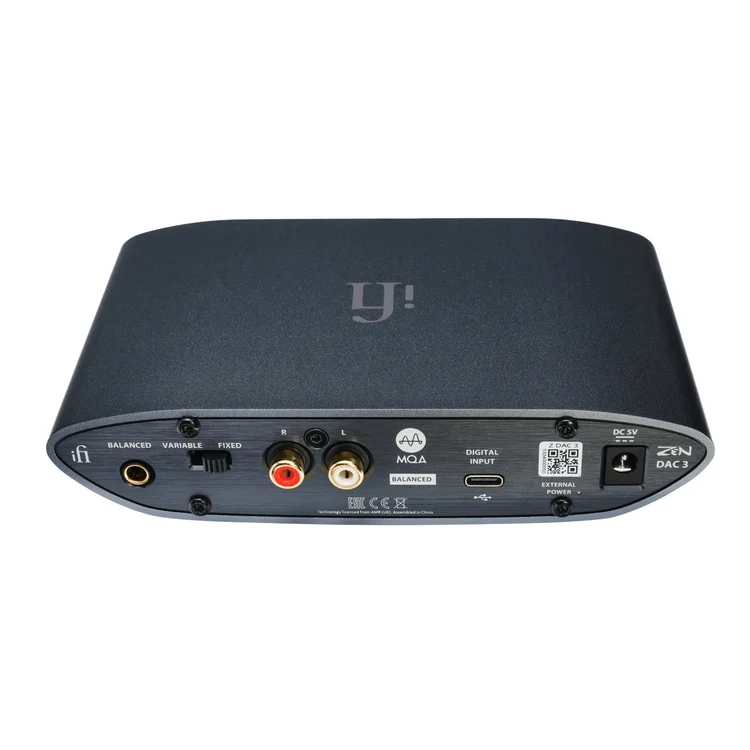
Image: iFi audio. Rear 4.4mm line output is separate from the front headphone socket.
Price checked: $229.00 new on November 18, 2026.
Key specs: Audio input: USB-C; Headphone outputs: 6.35mm and balanced 4.4mm; Line outputs: RCA and balanced 4.4mm; Power: USB or optional external 5V supply.
The ZEN DAC 3 revolves around one USB source. XBass+ changes bass response through an analog circuit; PowerMatch changes gain. Those are controls you can use, not evidence every pair of headphones needs more bass or gain. The rear fixed/variable switch lets the volume knob serve powered speakers too.
The manual specifies USB power and an optional, not included, external supply. Don’t add an expensive power adapter automatically. Use iFi’s download hub for the exact model’s driver and firmware. The manual directs Windows PC users to install the appropriate driver; basic USB playback and native-DSD support aren’t the same requirement.
Skip this for an optical or analog source: neither input is provided. The rear balanced line connection also needs an appropriate interconnect, not a headphone adapter. The linked Dark Gray DAC 3 isn’t ZEN CAN, ZEN DAC V2 or Black Stealth.
4. Creative Sound Blaster X5: Headphones and a Microphone
Buy Creative Sound Blaster X5 on Amazon ->
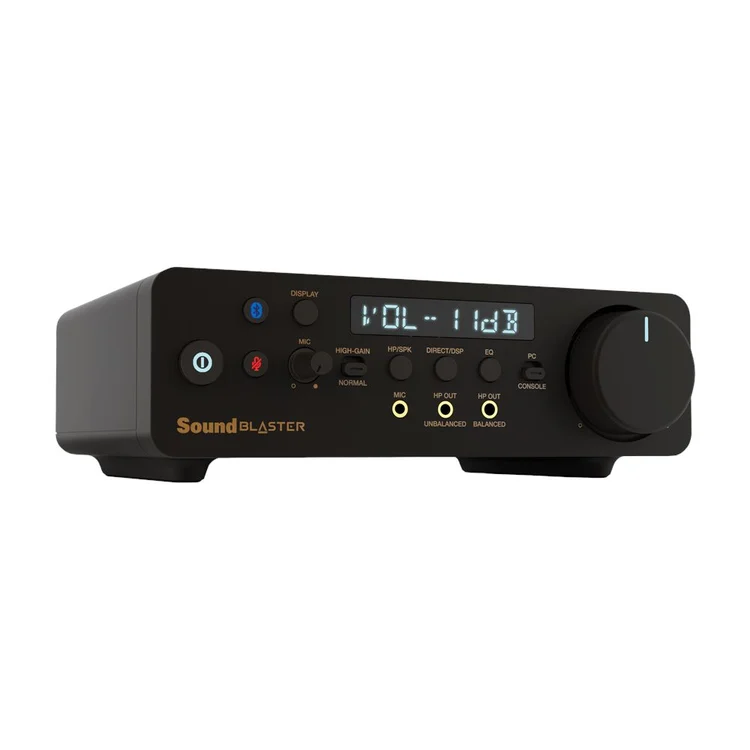
Image: Creative. US offer checked separately.
Price checked: $284.99 new on November 18, 2026.
Key specs: Headphone outputs: 3.5mm and balanced 4.4mm; Microphone connection: 3.5mm input with gain and mute; Computer connection: USB-C power/data; USB host limit: 5V/100mA.
The X5 is the useful exception if this purchase must handle voice as well as listening. A dedicated mic gain knob and mute button make sense on a work/gaming desk. Its connection guide explains headset-mic, mic-input and USB-host priority rather than pretending all attached microphones record at once.
Use the Creative App and support downloads for configuration. Creative provides Windows 10/11 and Mac versions; the mobile app doesn’t expose every desktop processing feature. The quick-start guide limits host-port power to 100mA, so don’t assume it powers any USB accessory.
This is a feature-led option for recording connections, not our simplest music-only pick. Native Bluetooth is a receiver; wireless-headphone transmission needs a separate compatible transmitter. It doesn’t replace an XLR interface, and extra routing is unnecessary if you already have a USB mic you like.
5. TOPPING DX5 II: EQ and a More Involved Speaker Setup
Buy TOPPING DX5 II on Amazon ->
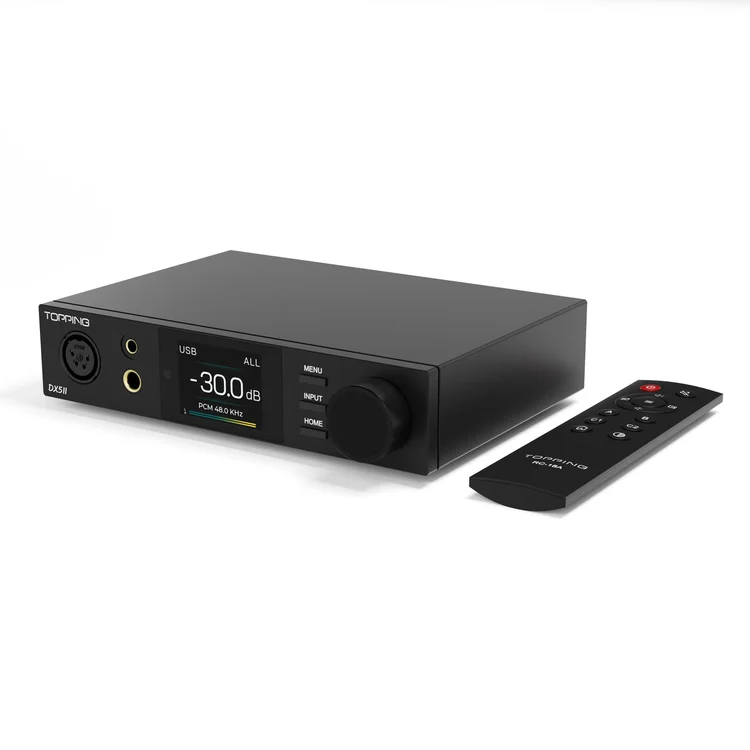
Image: TOPPING. One Black unit and remote shown.
Price checked: $299.00 new on November 18, 2026.
Key specs: Inputs: USB, optical, coaxial and Bluetooth; Headphone outputs: 6.35mm, balanced 4.4mm and four-pin XLR; Line outputs: RCA and balanced XLR; Controls: remote and 10-band parametric EQ.
Parametric EQ lets you adjust particular frequency ranges; balanced XLR line outputs suit powered monitors with matching inputs. The remote helps when the box isn’t within reach. None of those features makes the DX5 II a microphone interface.
The current manual documents fixed DAC versus volume-controlled preamp output and includes an AC cable, USB cable, antenna and headphone adapter. Use TOPPING Home WEB over USB in a WebHID-capable desktop browser such as Chrome or Edge, with compatible device firmware. Its support page explains that PEQ and crossfeed have sample-rate limits; high-resolution playback support doesn’t mean processing works at every rate.
Skip the complexity if you only need a volume knob and one USB source. There’s no analog input. Also check the official store: it advertised $254.15 during research, but confirm the Black/US-plug variant, delivery and final total. That’s a separate seller offer, not a verified Amazon discount or price-history claim.
Who Should Buy What
- A straightforward wired computer setup: start with the K11; keep the existing output if it already solves the job.
- An analog source alongside USB: the standard K7 accepts it.
- USB power and a physical bass control: the ZEN DAC 3 offers that combination.
- Microphone controls in the same box: examine the X5 and its setup requirements.
- Parametric EQ and XLR-connected powered monitors: the DX5 II adds those tools. Compare seller totals first.
FAQ
Will a DAC make my headphones sound better?
It can solve an inadequate or noisy output, but replacing an already competent one doesn’t guarantee an audible improvement. Check headphone sensitivity as well as impedance, and amplifier output at the relevant load. A balanced-output power figure doesn’t describe what you get from a different socket or prove a listening advantage. Our closed-back headphone guide covers the headphones themselves.
Can I plug a gaming headset into any of these?
Headphone playback and microphone capture are separate. A stereo adapter can connect the headphone side to an appropriate single-ended output, but doesn’t add a recording input. The X5 specifically provides headset/microphone routing; check the exact connector and Creative’s guide before expecting the mic to work.
Do I need balanced headphones or an expensive cable?
Not just because the amplifier offers a balanced socket. Use the correct existing single-ended connection first. If changing to balanced, use a cable designed for that headphone and output wiring; don’t adapt a balanced amplifier socket to an ordinary shared-ground plug. Start at low volume when changing gain, headphones or output modes.
Will these power passive bookshelf speakers?
No. Their line outputs feed powered speakers or another speaker amplifier. Passive speakers need a power amplifier, not an RCA-to-speaker-wire adapter. Set fixed versus variable line output deliberately so you retain an appropriate volume control.
Bottom Line
For gaming voice chat, start with our gaming-headset connection comparison. A music-focused headphone amplifier is not automatically a microphone input or a substitute for a compatible headset socket.
Buy the missing connection or control, not a promise that another DAC chip will transform music. The FiiO K11 covers a straightforward wired desk. Move up for a real need: analog input, USB-powered bass controls, microphone recording, or configurable EQ and XLR line outputs.
This article contains affiliate links. PicksLab may earn a small commission at no extra cost to you. Our recommendations are based on the review method described in this article.